Reviewed · TOURS
Mount Baker Climb Tour from Washington
Mount Baker gives you a serious introduction to mountaineering, not a dressed-up hike. Over three days, you learn to move across glaciers, use an ice axe, attach to a rope team, and camp on snow while aiming for one of the Cascades’ best-known summits. The mountain is the classroom, with blue ice, crevasses, seracs, and wide views toward Puget Sound.
I like the strong teaching focus and the fact that tents, permits, stoves, and group climbing gear are included. I also like the guides’ clear safety-first approach. Josh, Simon, Sam, Caleb, Andrew, and Drew are among the guides named by past participants, and their roles have included teaching skills, managing rope teams, and making hard calls when weather turned bad.
The main catch is simple: Mount Baker controls the schedule. You may train hard, climb high, and still turn around without reaching the summit. The tour is also non-refundable, meals are not included, and you must arrive with a moderate level of fitness and a willingness to carry your own personal equipment.
Key points to know before climbing Mount Baker
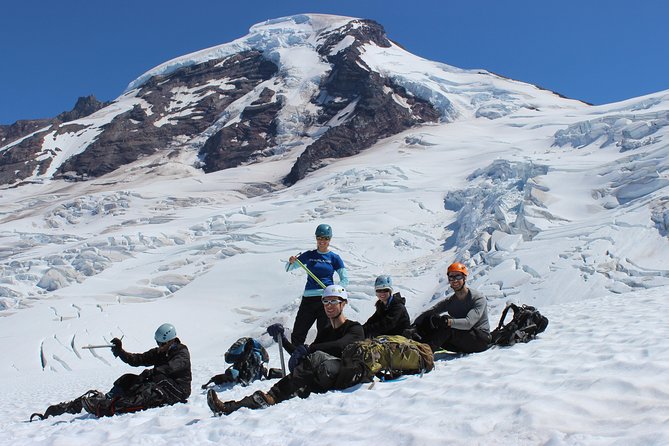
- A real glacier climb: You’ll practice crampon travel, ice axe arrest, rope work, knots, navigation, and hazard assessment.
- Two possible main routes: The trip may use the Easton Glacier route or the Coleman-Deming route, depending on conditions and planning.
- Three days in the mountains: The schedule includes a summit attempt, snow camping, training, and a hike out.
- Weather sets the rules: Summit day may move to day two, or the climb may change or turn around for safety.
- Small enough for instruction: The group can reach 15 people, with professional guide service included.
- Bring your own food and transport plan: Meals, hot drinks, snacks, and transportation from Seattle are extra.
What this Mount Baker climb is really like
This is aimed at experienced hikers who want to begin mountaineering. You do not need to arrive as a seasoned climber, but you do need enough fitness for a demanding three-day outing and enough patience to learn before pushing higher.
The trip is built around the Easton Glacier route or Coleman-Deming route on Mount Baker. Both involve glacier travel and route finding around serious alpine hazards. You can expect icefalls, seracs, large crevasses, steep sections, and changing conditions.
That matters because this is not simply a summit walk. Your guide may stop to teach rope spacing, crampon technique, ice axe positions, or how to assess a hazard. The slower pace is part of the point. You are gaining skills that can help on later Cascade climbs, including Mount Shuksan, harder Mount Baker routes, and other alpine trips.
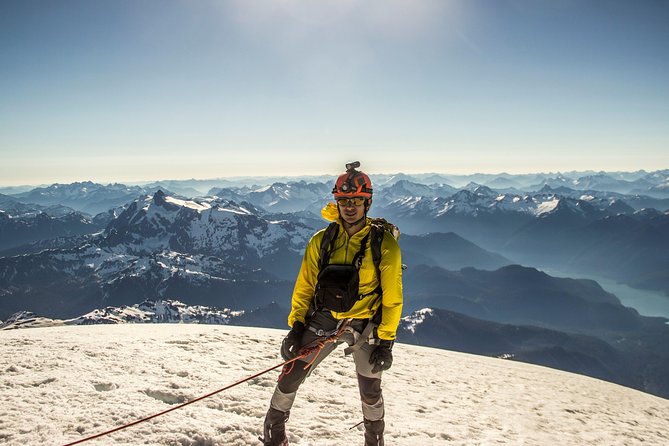
The scenery gives the lessons some reward. Mountain streams, blue glaciers, snow camping, and views toward Puget Sound make the setting memorable even if the summit is out of reach. One participant spent extra time at a snowy base camp after poor visibility closed in, and still found the place beautiful and useful as a training ground.
Other Seattle outings people pair with this one:
- Beneath The Streets Underground History Tour
★ 4.5 · 8,006 reviews - Chef Guided Food Tour of Pike Place Market
★ 5.0 · 3,733 reviews - Mt. Rainier National Park Highlights Tour
★ 5.0 · 3,156 reviews
Gear planning begins before you leave Seattle
Miyar Adventures includes a pre-trip planning and information session focused on packing and gear. A gear check takes place at least three days before the climb, giving you time to find missing items rather than discovering a problem at the trailhead.
That check is especially useful for first-time mountaineers. Packing for a glacier climb is a balancing act. Too much weight makes every uphill step harder. Too little gear can create real problems in cold, wet, or windy conditions.
Included equipment covers tents, stoves and cook kits, group climbing equipment, permits, and guide services. The phrase group climbing equipment matters. You should not assume every personal clothing item, boot, pack, or other individual necessity is supplied, so use the gear session carefully and ask exactly what you must provide.
You are also responsible for all meals, hot drinks, and snacks. Plan this well. A summit attempt uses a great deal of energy, and the tour price does not include food. Transportation is separate too. The company helps arrange carpools, or transportation can be provided for an extra fee.
The meeting information lists a Seattle-area park and ride, with one time shown as 7:30 a.m. and pickup details stating 8:00 a.m. Confirm the exact meeting time and location before departure. That small check can prevent a stressful start to a demanding trip.
Day one: approach, instruction, and snow camping
The first day begins in the Seattle area and leads into Mount Baker-Snoqualmie National Forest. The supplied itinerary does not set out a fixed series of named stops, so your exact approach depends on the route selected and current conditions.
Expect the first day to combine movement toward camp with hands-on instruction. Your guides cover personal equipment, packing for glacier travel, ice axe positions, self-arrest, crampon use, walking with and without crampons, climbing knots, and rope management.
This training is not filler. If you have only hiked on ordinary trails, walking in crampons and staying connected to a rope team will feel unfamiliar. You need to learn how to place your feet, keep your balance, handle the rope, and respond to a slip before you are high on the mountain.
You will also work on navigation, route finding, hazard assessment, cold-weather camping, and Leave No Trace practices. The glacier becomes a practical workshop. Guides must read the route and changing hazards, while you learn why a safe line across the snow may not be the most direct one.
The camp itself is basic. Tents and cooking equipment are included, but you should not expect a comfortable lodge or a ready-made menu. Snow camping is part of the mountaineering lesson, and the cold can make simple tasks feel slow. Good preparation and a sensible packing plan matter here.
Day two: the summit attempt and the hard safety call
The summit attempt is the centerpiece, but the day it happens can change. If weather and route conditions look better early, the summit push may happen on day two. The group can then sleep in on day three and enjoy a more relaxed hike out.
On the climb, you may negotiate glacier features, icefalls, seracs, and large crevasses. The precise route depends on the Easton Glacier or Coleman-Deming plan, along with current conditions. The guide’s job is not only to lead upward, but to manage the rope team and keep the group moving through changing terrain.
Past climbs with Miyar have used guides including Simon and Sam, Caleb, Andrew, Drew, Josh, Jalen, Ryan, and Bailey. The exact guide team is not guaranteed, but the consistent role is clear: teach the skills, manage the route, answer questions, and put safety ahead of the summit.
That last point deserves emphasis. On one climb, Josh turned the group around when visibility became poor and conditions worsened. On another, Caleb made the same kind of safety-first decision near the top when weather changed. A missed summit can be disappointing, especially after paying for a guided climb, but turning around is part of responsible mountaineering.
This is also where the tour’s value becomes easier to judge. You are not paying only for a summit photo. You are paying for route decisions, rope management, instruction, equipment, permits, and the judgment to stop when the mountain is no longer safe.
Several successful climbs included instruction along the way. Simon helped participants feel secure on sections such as Colfax Peak and the Roman Wall, while other guide teams taught essential skills before leading groups up and down safely. You should still understand that summit success is never promised.
Same city, a very different way to spend the day:
- Seattle: Guided Underground Walking Tour
★ 4.6 · 2,144 reviews - Seattle’s Original Guided Harbor Cruise
★ 4.5 · 2,077 reviews - Seattle City Highlights Tour
★ 5.0 · 2,000 reviews - Seattle: Space Needle & Chihuly Garden and Glass Ticket
★ 4.7 · 1,890 reviews
Day three: a changed plan or a careful hike out
If the summit attempt takes place on day two, day three becomes a slower return from camp. That can be a welcome change after a long summit effort. You may have more time to pack, review what you learned, and hike out without the same pressure.
If weather or route conditions force a different schedule, the third day may include more training or a changed descent. The operator notes that the itinerary can shift for bad weather, unsafe route conditions, or other reasons outside its control.
That flexibility is essential on Mount Baker. A fixed timetable may sound tidy when you book, but alpine conditions do not follow a brochure. You should arrive ready for a plan that changes while still keeping safety and learning at the center.
The final descent is also not an afterthought. Moving downhill on tired legs can be demanding, and glacier travel still requires attention. Keep your rope position, crampon technique, and footing in mind until you are off the mountain.
The skills you take home
The most useful part of this experience may be what remains after Mount Baker. The course covers a base set of mountaineering skills that can support future climbs:
- Choosing and packing personal equipment for glacier travel
- Using crampons on snow and ice
- Walking safely with and without crampons
- Holding an ice axe and performing self-arrest
- Tying climbing knots
- Joining a rope team
- Managing rope movement on a glacier
- Navigating and finding a route
- Assessing hazards
- Camping in cold weather
- Following Leave No Trace practices
This does not make you an independent mountaineer after three days. It does give you a practical first step and a clearer idea of what intermediate climbs demand. The experience is best viewed as guided training with a summit goal, not as a guaranteed shortcut to advanced climbing.
I especially like the balance between formal instruction and real mountain travel. You learn a skill, then use it in the terrain that makes the skill necessary. That connection is more useful than practicing knots in a parking lot and never applying them.
Group size, guides, and the value of supervision
The group size is capped at 15 people. That is not a tiny private expedition, but it is still limited enough for structured instruction, provided the guide ratio and group dynamics work well on your date.
A larger group can mean a slower pace and more waiting during transitions. It can also give you a rope team with different experience levels. If you want a private or highly customized climb, ask about the exact group arrangement before booking.
The strongest feature of the guide service is the emphasis on calm decisions and personal support. Andrew and Sam were praised for answering questions and helping the group prepare for its summit window. Caleb was singled out for making a climber feel comfortable. Simon was trusted on technical sections and also made the trip enjoyable.
Those details suggest a useful guide style: professional, hands-on, and willing to teach rather than simply pull you uphill. Still, mountain conditions and guide assignments change, so treat the named guides as examples rather than a promise that one particular person will lead your trip.
What the price includes, and what it does not
No tour price is supplied here, so I cannot judge the exact dollar amount. I can judge the package itself.
The included permits, tents, stoves, cook kits, group climbing equipment, guide services, planning session, and outdoor safety instruction cover many costs that can add up quickly on a self-organized climb. You also gain professional route management in a setting where poor decisions can have serious results.
You must add transportation, food, hot drinks, snacks, and guide gratuities. Personal clothing and individual equipment may also be your responsibility, so confirm the gear list during the pre-trip check.
For the right person, that can be good value. You receive more than access to a trail. You receive instruction, organization, group equipment, and a guide team that handles permits and route decisions.
The value is weaker if your only goal is a summit photograph and you cannot accept a weather-related turn around. The trip can end without a summit, and the experience is non-refundable if you cancel or request a change. If the operator cancels because the minimum number of participants is not met, you are offered another date or experience, or a full refund.
Who should book this Mount Baker experience
I would consider this a strong fit if you:
- Have experience with strenuous hiking
- Want to learn the basics of glacier mountaineering
- Can handle cold-weather camping
- Are comfortable carrying personal gear
- Accept that weather may cancel the summit
- Want professional guidance instead of organizing permits and equipment alone
- Hope to build toward climbs such as Mount Shuksan or harder Cascade routes
It is a poor fit if you want a relaxed mountain holiday, dislike sleeping in tents, or expect a fixed schedule. The phrase moderate physical fitness is the minimum guidance provided, but the actual climb includes long, demanding mountain days and technical glacier travel.
Families should ask careful questions before booking. One past climb included a 10-year-old, but that was part of a four-day glacier travel course and does not establish a general age policy for this three-day experience. Confirm suitability directly with the operator.
Should you book the Mount Baker climb?
Book it if you want a genuine first step into mountaineering and understand that the summit is only one measure of success. The included training, equipment, permits, and professional supervision make this more useful than a simple guided hike, and the named guide teams have shown a clear willingness to put safety first.
Do not book it if you need a guaranteed summit, all-inclusive meals, included transportation, or a refundable reservation. Before paying, confirm the exact route, guide team, meeting time, personal gear list, group arrangement, and weather policy.
For a fit hiker with patience and a serious interest in alpine skills, Mount Baker offers a memorable three-day test. You may reach the top. You may turn around below it. Either way, you should leave with a better understanding of glaciers, rope travel, and the judgment required to climb them safely.
FAQ
How long is the Mount Baker climb tour?
The experience lasts approximately three days.
Where does the tour begin?
It begins in Seattle, Washington, with pickup at a convenient Seattle-area park and ride.
What time is pickup?
The information lists a 7:30 a.m. start time and an 8:00 a.m. park and ride pickup. Confirm the exact time and meeting point before departure.
Which route will the climb use?
The climb may use the Easton Glacier route or the Coleman-Deming route. The route can change because of weather, route conditions, or safety concerns.
Is climbing equipment included?
Tents, stoves, cook kits, group climbing equipment, permits, and guide services are included. You should confirm which personal clothing and individual equipment you must supply.
Are meals included?
No. You must provide your own meals, hot drinks, and snacks.
Can the tour be canceled or changed for a refund?
The experience is non-refundable and cannot be changed after booking. If the operator cancels because the minimum number of participants is not met, you are offered another date or experience, or a full refund.
Recently added around Seattle
- One – Way Transfer from Pier 66 to SeaTac international Airport★ 3.5 · 3 reviews
- Where the Hops Grow! Yakima Brewery Tour★ 5.0 · 3 reviews
- Winter Day Tour to Longmire on Mount Rainier from Seattle★ 5.0 · 4 reviews
- Yellowstone Grand Teton and Coeur d’Alene 5-Day Tour from Seattle★ 5.0 · 5 reviews
- Food Tasting & Arts Tour of Pike Place Market★ 5.0 · 27 reviews
- Private Cascade Mountains and Waterfalls Tour from Seattle★ 5.0 · 6 reviews
- Enjoy Woodinville Winery area by Chauffeured Private Vehicle★ 3.5 · 5 reviews
- Awesome Scavenger Hunt: Seattle By The Sound★ 3.5 · 3 reviews
Tours, compared.