
Reviewed · CANADA DAY TRIPS FROM SEATTLE
Seattle, WA to Victoria, BC High-Speed Passenger Ferry: ONE-WAY
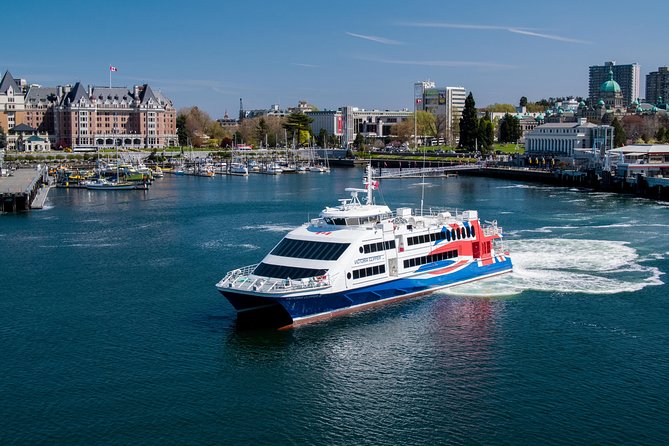
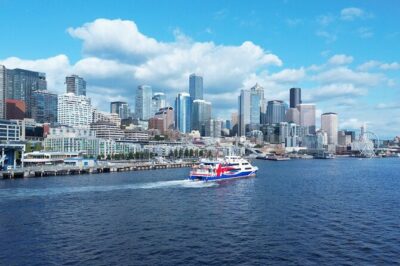
The best thing about this Seattle to Victoria ferry is that it gets you from one city center to the other without a car, airport transfer, or long highway detour. The FRS Clipper crosses Puget Sound and the Strait of Juan de Fuca in about three hours, then leaves you at Victoria’s Inner Harbour, close to restaurants, shops, and major sights. I especially like the large windows, the smooth high-speed ride, and the chance to spot whales when the crew slows down for a good view.
I also like the simple downtown-to-downtown setup and the useful onboard services, including food, drinks, restrooms, and duty-free shopping. The main drawback is cost: $136.50 for one way is a serious transport expense, and checked luggage costs extra. You also need to arrive prepared with the right border documents and passenger information.
Key points to know before booking
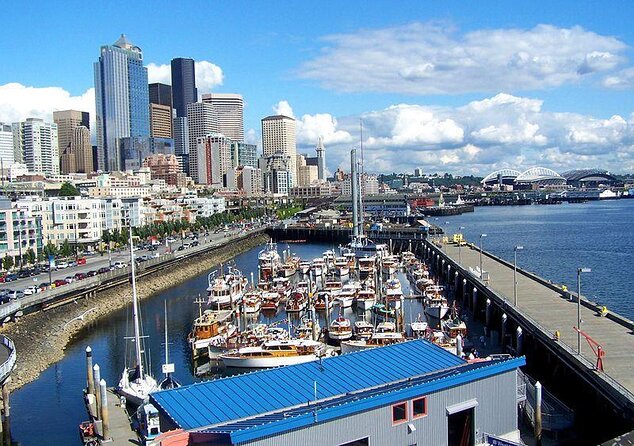
- Downtown Seattle to downtown Victoria: The ferry leaves from 2701 Alaskan Way and arrives at Victoria’s Belleville Terminal, right in the Inner Harbour.
- About three hours on a high-speed catamaran: The ride is much faster than a conventional sightseeing cruise, while still giving you broad views of Puget Sound and the Strait of Juan de Fuca.
- Passenger-only service: Cars are not accepted, so this works best if you plan to walk, use local transport, or arrange a separate vehicle in Victoria.
- Economy seating is included: Vista and Comfort Class upgrades may be available, with pricing and availability handled by the provider.
- Bring the correct border documents: A passport, passport card, enhanced driver license, or enhanced ID card is required for sea travel between the United States and Canada.
- Pack light if you want to save money: One small carry-on is allowed, while checked luggage costs $20 per piece.
Seattle’s waterfront departure
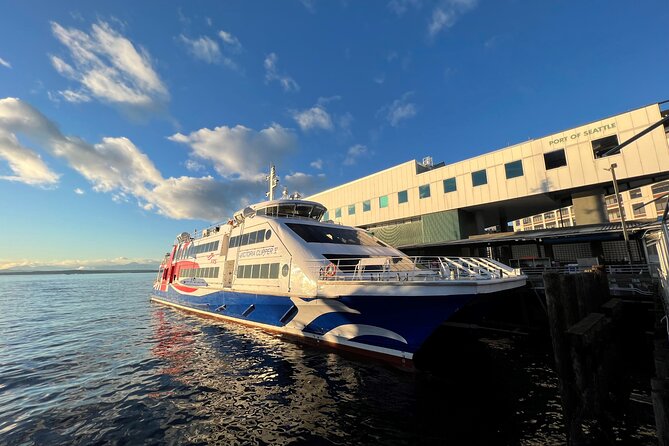
Your trip begins at 2701 Alaskan Way, on Seattle’s waterfront. This location is convenient if you are staying near the downtown core, but you should allow enough time to reach the terminal, check in, and deal with border requirements before departure.
Arriving an hour early is sensible. The ferry is not a hop-on city bus. You need time for ticket checks, document checks, and boarding. The best boarding experiences come from having your passport information ready and keeping your ticket accessible on your phone.
Your mobile ticket is useful, but it does not replace the need for valid identification. At booking, you must provide each passenger’s citizenship, full name, and date of birth exactly as shown on the travel document. A booking cannot be confirmed without those details.
This is a passenger-only ferry, so leave your car behind. That sounds obvious, but it matters when planning a longer trip. You cannot drive onto the vessel, and a car rental or other vehicle arrangement in Victoria is separate from this ticket.
More day trips over to Canada:
- From Seattle: Round Trip by High Speed Ferry to Victoria, BC
★ 4.0 · 479 reviews - Seattle to Vancouver Urban and Scenic Day Trip
★ 4.5 · 268 reviews - Seattle: Victoria, BC Round-Trip Ferry Tour
★ 4.7 · 48 reviews
Three hours across Puget Sound
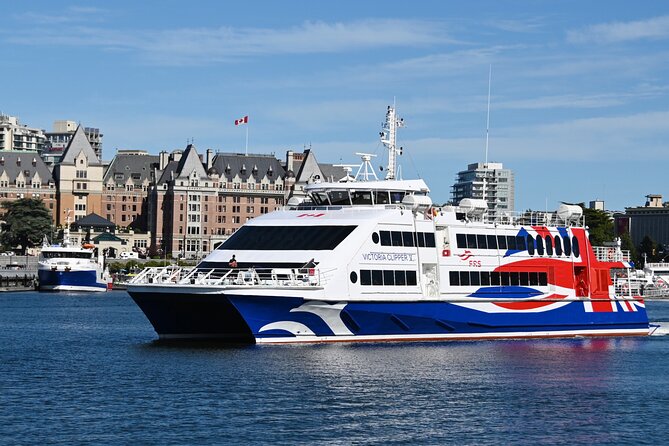
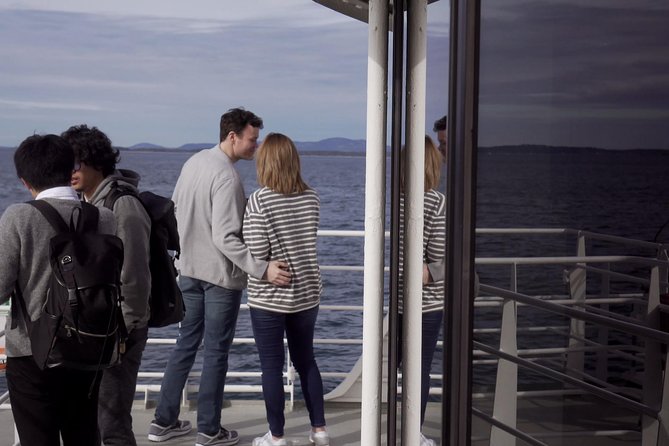
Once underway, the FRS Clipper feels more like a fast passenger vessel than a traditional car ferry. The catamaran design helps keep the ride quick, and the smooth sailing is a major reason this route works well for a day trip, short break, or one-way Canadian itinerary.
The route first gives you views across Puget Sound, then opens toward the Strait of Juan de Fuca. Weather makes a real difference. On a clear day, the windows give you a fine view of the water and passing scenery. Fog can reduce the payoff, though that is simply part of traveling in this corner of the Pacific Northwest.
The ride is generally comfortable, but no boat is completely still. One passenger described only light rocking, while another noted that nausea assistance was available. If you are sensitive to motion, sit where you feel most comfortable, keep an eye on the horizon, and consider bringing whatever remedy you normally use.
The crew may provide commentary about sights along the route. On some sailings, the captain or onboard staff points out wildlife, and the vessel may slow down when whales are spotted. There is no guarantee of a whale sighting, but the possibility adds a welcome bit of excitement to what could otherwise be a straightforward transfer.
Keep your camera ready, but do not spend the entire crossing staring through your phone. The water views are the main attraction, and the changing scenery is best enjoyed from a window seat or another spot with a clear view.
Economy seating and cabin comfort
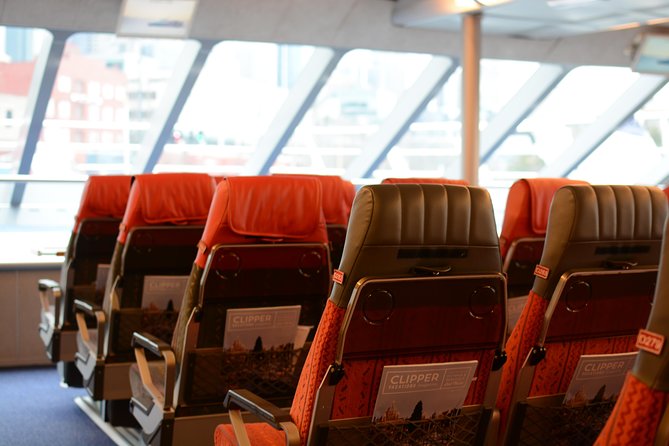
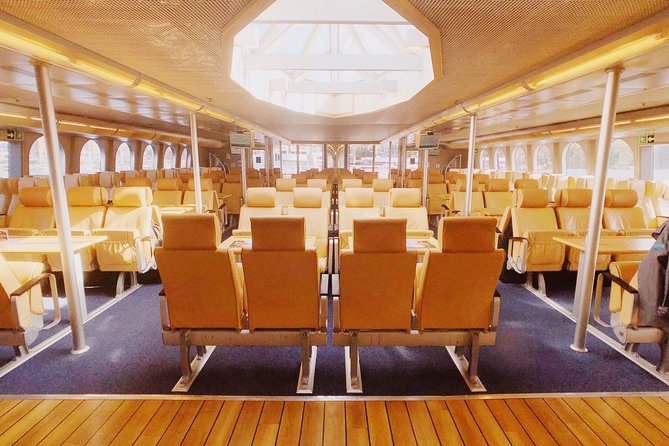
Economy Class seating is included in the advertised price. The seats are assigned on some sailings, and the cabin has large windows, clean seating areas, and restrooms. The setup is closer to airline-style transport than to an open-deck sightseeing boat.
That makes the trip practical in poor weather. You can sit inside, read, eat, or simply watch the water without worrying about wind and spray. You may find the cabin less exciting than an outdoor ferry deck, but the large windows help preserve the sense of motion and place.
Vista and Comfort Class seating may be available as an upgrade. Pricing and availability must be checked with FRS Clipper. Comfort Class can make sense if you place a high value on a better view, extra space, or included snacks, but the standard economy cabin is the sensible choice for many people.
One point is worth considering before you pay for an upgrade: a higher class will not shorten the three-hour crossing. It changes the seating experience, not the route or border process. For a first trip, economy gives you a useful baseline. You can choose a premium section next time if you decide the extra comfort matters to you.
Food, drinks, and duty-free shopping
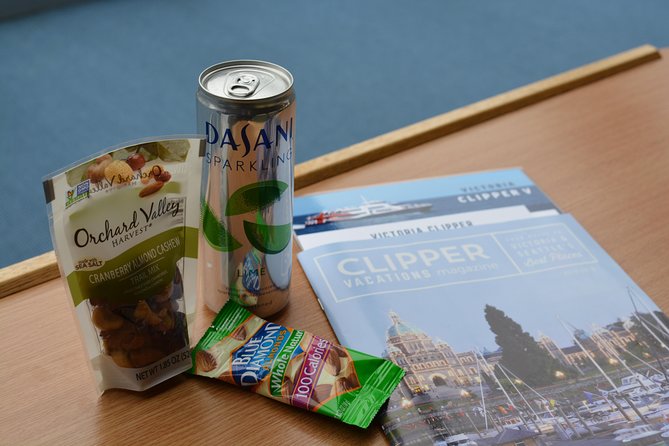
Food and drinks are not included in the ticket price. You can buy items onboard, including alcoholic drinks, and the service gives you an easy way to make the crossing more comfortable.
The food is functional rather than a reason to book the ferry. Breakfast is available on some sailings, but it can be expensive. Packaged food is useful when you want something during the trip, yet you should not expect a full restaurant meal or bargain prices.
Duty-free shopping is available because you are crossing from the United States into Canada. It may be worth a look, but treat it as a convenience rather than a central feature. The real value of this service is the direct transport, the scenery, and the downtown arrival.
If you want to control your spending, budget for the ticket first, then decide how much you want to spend onboard. The fare already sits above a basic bus or road trip cost, so food, alcohol, premium seating, and checked bags can push the total higher.
Same city, a very different way to spend the day:
- Beneath The Streets Underground History Tour
★ 4.5 · 8,006 reviews - Chef Guided Food Tour of Pike Place Market
★ 5.0 · 3,733 reviews - Mt. Rainier National Park Highlights Tour
★ 5.0 · 3,156 reviews - Seattle: Guided Underground Walking Tour
★ 4.6 · 2,144 reviews
Arriving at Victoria’s Belleville Terminal
The ferry arrives at 254 Belleville Street, at the Victoria FRS Clipper terminal in the Inner Harbour. This is one of the route’s strongest advantages. You do not arrive at an out-of-town transport hub and then spend another hour getting into the center.
From the terminal, Victoria’s dining, shopping, and central attractions are within easy reach. The arrival also gives you a quick start if you have only one or two days in town. You can leave the ferry, collect your luggage, and begin exploring without arranging a long transfer.
The terminal location also helps if Victoria is only one part of a larger trip. The ferry is a useful link for an itinerary that starts in Seattle and continues through British Columbia. It avoids the hassle of airport security and preserves the feeling of crossing between two coastal cities rather than simply flying over the region.
Departure instructions in Victoria are described as easy to follow, but keep your ticket and travel documents handy after disembarking. You are crossing an international border, so customs procedures still apply even though the trip feels like a local ferry ride.
Border documents and customs details
This is the part you should take most seriously. For sea travel between the United States and Canada, you need one of the accepted documents listed for the service:
- A valid passport
- A passport card
- An enhanced driver license
- An enhanced identification card
A passport is required for air travel, while a passport card or enhanced license is not valid for flying. That distinction matters if your wider itinerary includes a flight.
At booking, enter citizenship, full names, and birth dates exactly as they appear on the documents you will use. Errors can create trouble at check-in, even when the mistake is small.
A person with a felony may be denied entry to Canada, and a DUI is considered a felony in Canada. If this could apply to you, research your eligibility before purchasing a nonrefundable last-minute arrangement. The ferry ticket does not guarantee admission across the border.
Luggage, bikes, dogs, and practical limits
The standard allowance is one small carry-on. Checked luggage costs $20 per piece, and one sailing included a reminder that a large suitcase may have a 50-pound weight limit. Check the current baggage rules carefully if you are carrying more than a day bag.
The extra luggage fee changes the value calculation. A light packer may find the ferry price reasonable for the direct city-center service. A couple with several large suitcases can quickly pay more than expected.
Bikes and dogs have restrictions, and you must advise the provider at the time of booking if you plan to bring either. Service animals are allowed. Do not assume a regular pet or bicycle can be handled like an ordinary carry-on.
Public transportation is available near the terminals, which is useful if you are staying outside central Seattle or Victoria. Still, the simplest plan is to travel light and know how you will reach your accommodation after arrival.
Delays, cancellations, and value
The usual crossing takes about three hours, but schedules are not immune to delays. One sailing left roughly 35 minutes late, while other trips arrived ahead of schedule. That range is a reminder not to schedule an important event immediately after arrival.
Cancellations can happen because of weather or other operating requirements. Poor communication during a cancellation can be especially frustrating if you have hotel nights or onward plans fixed in Victoria. Build some flexibility into your schedule if missing a day would cause a major problem.
The price of $136.50 per person is easiest to justify when you value three things: direct downtown arrival, a scenic international crossing, and the time saved compared with a more complicated route. It is less appealing if you are focused only on the cheapest possible transport.
For a couple, family, or solo visitor who would otherwise pay for airport transfers, baggage, and a rental car, the ferry can make financial sense. For a group already driving through the region, the passenger-only setup may be less convenient.
The ticket includes the fuel surcharge, GST, and economy seating. It does not include food, drinks, alcohol, checked luggage, or premium seating. Free cancellation is available if you cancel at least 24 hours before the start time. Changes or cancellations inside that window are not accepted for a refund, and weather or minimum-participation cancellations may lead to another date or a full refund.
Who should take the Clipper
I would recommend this ferry for visitors staying in central Seattle who want a pleasant way to reach Victoria without a car. It is also a good fit for couples, families, and solo travelers who prefer a direct ride and can travel with modest luggage.
It suits you especially well if:
- You want the journey to be part of the trip, not just a transfer.
- You like seeing Puget Sound and the Strait of Juan de Fuca.
- You are staying near Victoria’s Inner Harbour.
- You want to avoid driving, parking, and airport procedures.
- You can provide the required border documents.
- You are comfortable paying extra for a direct, scenic connection.
I would think twice if you need to transport a car, several large bags, a bicycle, or a dog without checking special restrictions first. I would also avoid building an important same-day connection around the scheduled arrival, since delays and weather-related cancellations are possible.
Should you book this Seattle to Victoria ferry?
Book it if you want a fast, scenic, city-center connection and see the crossing as part of your holiday. The smooth catamaran ride, wide windows, helpful crew, occasional whale sightings, and central Victoria arrival make this more than a basic transfer.
Skip it if the fare feels too high for your budget or if your plans require guaranteed timing, heavy luggage, or a private vehicle. For most visitors who pack light and prepare their documents carefully, the FRS Clipper is one of the most enjoyable ways to move between Seattle and Victoria.
FAQ
How long does the ferry ride from Seattle to Victoria take?
The crossing takes approximately three hours. The route travels through Puget Sound and the Strait of Juan de Fuca before arriving at Victoria’s Inner Harbour.
Where does the ferry leave from in Seattle?
The departure point is 2701 Alaskan Way, Seattle, Washington 98121.
Where does the ferry arrive in Victoria?
The ferry arrives at Belleville Terminal, 254 Belleville Street, in Victoria’s Inner Harbour.
What travel documents do I need?
You need a passport, passport card, enhanced driver license, or enhanced identification card for the sea crossing between the United States and Canada. A passport is required for air travel.
Can I bring a car on the ferry?
No. This is a passenger-only ferry service, and cars are not allowed.
Is checked luggage included?
No. The ticket includes one small carry-on, while checked luggage costs $20 per piece. Bikes and dogs have restrictions, so you must advise the provider when booking if you plan to bring either.
Recently added around Seattle
- One – Way Transfer from Pier 66 to SeaTac international Airport★ 3.5 · 3 reviews
- Where the Hops Grow! Yakima Brewery Tour★ 5.0 · 3 reviews
- Winter Day Tour to Longmire on Mount Rainier from Seattle★ 5.0 · 4 reviews
- Yellowstone Grand Teton and Coeur d’Alene 5-Day Tour from Seattle★ 5.0 · 5 reviews
- Food Tasting & Arts Tour of Pike Place Market★ 5.0 · 27 reviews
- Private Cascade Mountains and Waterfalls Tour from Seattle★ 5.0 · 6 reviews
- Enjoy Woodinville Winery area by Chauffeured Private Vehicle★ 3.5 · 5 reviews
- Awesome Scavenger Hunt: Seattle By The Sound★ 3.5 · 3 reviews
Canada Day Trips from Seattle, compared.
Round Trip by High Speed Ferry to Victoria, BC
Read our review →
Seattle to Vancouver Urban and Scenic Day Trip
Read our review →

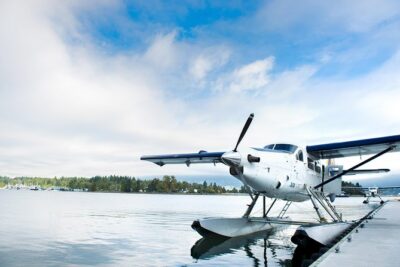
Seattle to Vancouver Scenic Seaplane Transfer: One Way
Read our review →Browse the lists this tour appears in