
Reviewed · SEATTLE
Intro to Outdoor Rock climbing
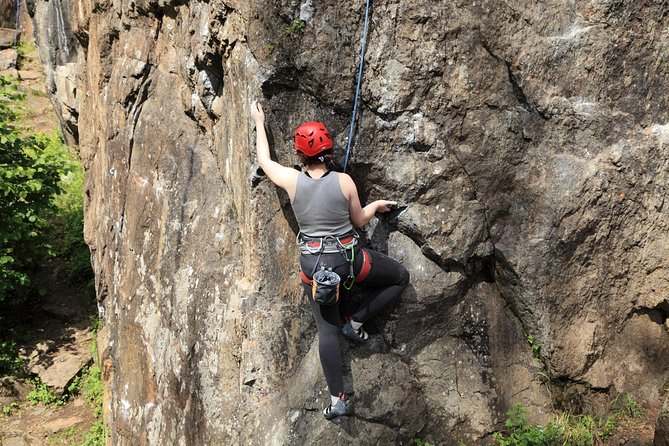
Outdoor rock climbing near Seattle gives you more than a taste of the sport. You spend the day at a natural cliff, learning the ropes in the literal sense, then putting those skills to work on five to six top-rope routes. The small group keeps the instruction personal, which matters when you are handling a belay device or trying your first crack.
I like the clear progression from gear and knots to commands, belaying, and climbing. I also like that the course aims to prepare you for an indoor gym belay test, giving the day a useful next step. The main consideration is that the exact climbing area can depend on weather, and one past outing moved nearly two hours east to Frenchman Coulee.
Key points to know before booking
- Five to six outdoor routes: You get repeated practice, not just one short climb.
- Small groups of up to six: The guide can give more direct help with knots, belaying, and technique.
- Beginner-friendly instruction: No previous outdoor climbing experience is required, and the course covers skills from the ground up.
- A short hike reaches the cliff: Expect a moderate physical day rather than a drive-up sightseeing stop.
- Some gear costs extra: Ropes, anchors, belay devices, and a medical kit are included, but harnesses, helmets, shoes, and chalk are not.
- Weather can change the plan: The Seattle area is the intended setting, but the group may relocate to find safe, climbable rock.
Why this Seattle climbing day works for beginners
This is an introduction to outdoor climbing, not a hard summit attempt. That distinction matters. You are not expected to arrive knowing how to tie in, run a belay, or read a rock face. The day is built around repetition and supervision, so you can learn a skill, try it, correct it, and try again.
The top-rope format is a sensible choice for first-timers. The rope is arranged above the route, allowing you to focus on movement and basic technique without dealing with lead-climbing protection. You still learn serious safety skills, including how to catch a fall while belaying, but the format keeps the first outdoor experience manageable.
I especially like the mix of instruction and actual climbing. A class spent entirely on knots can feel dry, while a day of climbing with no safety teaching leaves you unprepared. Here, you discuss equipment and commands, practice belaying, and then climb several routes with different rock features.
The course also has a practical goal beyond one day outside. The skills covered are intended to help you pass a belay test at an indoor climbing gym. That does not mean you will leave ready for every kind of climbing. It does mean the day can serve as a bridge from complete beginner to regular gym participant.
Other Seattle outings people pair with this one:
- Beneath The Streets Underground History Tour
★ 4.5 · 8,006 reviews - Chef Guided Food Tour of Pike Place Market
★ 5.0 · 3,733 reviews - Mt. Rainier National Park Highlights Tour
★ 5.0 · 3,156 reviews
From Miyar Adventures to the natural cliff
The meeting point is Miyar Adventures at 1120 NW Ballard Way in Seattle. The scheduled start is 9:00 am, and the activity ends back at the same meeting point. Transportation, meals, and snacks are not included, so plan your morning around getting there on time and bring food for a full day outside.
After meeting the guide, the group takes a short hike to a natural cliff face. The word short is useful, but you should still expect uneven outdoor ground and a day that calls for moderate fitness. This is not an indoor gym class with a padded floor and easy access to a water fountain.
The exact rock area may change. Weather affected one outing enough that the group drove nearly two hours east to Frenchman Coulee. That made for a longer day, but it also put the climbers on suitable rock and preserved the main purpose of the course. If you are booking this as a tightly timed Seattle activity, keep your evening flexible.
The Frenchman Coulee example also shows how the provider handles changing conditions. The group collected gear, picked up the instructor, and made the longer drive rather than forcing a climb in poor conditions. You should see that as a practical safety choice, though the added road time may not suit anyone with firm evening plans.
Gear, knots, and the safety briefing
At the cliff, the early part of the day deals with the equipment that makes climbing possible. You learn about harnesses, helmets, carabiners, belay devices, chalk bags, rock shoes, ropes, and quickdraws. Not every item is used in the same way during a top-rope lesson, but knowing what each piece does gives you a useful foundation.
The class covers both ATC-style belay devices and auto-locking devices. You learn climbing knots and standard climbing commands, too. These details can seem fussy at first, yet clear commands and secure knots are what let a climbing partner understand what is happening above the ground.
The belay lesson is one of the most valuable parts of the day. You practice managing the rope and learn how to catch a fall. That is a hands-on responsibility, not a bit of vocabulary, so the small group size helps. With no more than six people, the instructor has a better chance to watch your technique and correct mistakes before they become habits.
The included gear is limited but important. Ropes and anchor materials for the top-rope setup are provided, along with belay devices and a group medical kit. You need to arrange a harness, helmet, and rock-climbing shoes separately, though rentals are available. A chalk bag and chalk are optional.
Since the supplied details do not include rental prices, check the current cost before booking. The value of the course depends partly on what you already own. If you need every personal item, add those rentals to the total. If you already have a harness, helmet, and shoes, the included instruction and climbing setup make the package more attractive.
Climbing five to six different top-rope routes
Once the safety work is complete, the day becomes active. You climb at least five routes, and often five to six, using different rock types and features. That variety is important for a beginner because one easy route can give you false confidence, while one difficult route can make the sport seem impossible.
You may work on basic movement across rock faces and learn how cracks change the way you place your hands and feet. The instruction also covers basic climbing technique, so you are not simply pulling upward with your arms. The goal is to understand how to move with control and make sensible choices on the rock.
The routes can be adjusted to your level. One beginner may feel nervous on the first climb, while another may want a harder challenge after getting comfortable. The guides can look for a more demanding route if an easier climb proves too simple. That flexibility is helpful for couples or friends who arrive with different levels of strength and confidence.
The course does not require above-average strength. You still need moderate fitness, and climbing can be tiring, but the structure allows you to learn without treating the day as a test of athletic ability. If you are worried about fear of heights, the guide can help you work through the first steps at a sensible pace.
The repeated routes also give you time to practice belaying. You are not only climbing while someone else handles the rope. You learn to take responsibility for the person on the wall, follow commands, and respond properly if that climber slips. That two-sided experience is what makes the course more useful than a simple guided climb.
Same city, a very different way to spend the day:
- Seattle: Guided Underground Walking Tour
★ 4.6 · 2,144 reviews - Seattle’s Original Guided Harbor Cruise
★ 4.5 · 2,077 reviews - Seattle City Highlights Tour
★ 5.0 · 2,000 reviews - Seattle: Space Needle & Chihuly Garden and Glass Ticket
★ 4.7 · 1,890 reviews
The guide makes the difference
Outdoor climbing demands trust. You need to feel that the guide takes safety seriously, explains clearly, and lets you ask questions without making you feel foolish. The experience has been guided by instructors including Brett, Simon, and Glen, and the strongest praise centers on patient teaching, friendly help, and calming nerves.
Brett is noted for strong teaching, while Simon helped beginners get comfortable with outdoor rock and work past their fears. Glen guided a couple through their first outdoor climbing day, starting from the basics and keeping safety first. Those details point to the right teaching style for this course: calm, practical, and focused on helping you understand what you are doing.
You should still ask questions. If a knot feels uncertain, stop and ask. If you do not understand a command, repeat it before climbing begins. Outdoor climbing is a poor place to pretend you are comfortable when you are not.
The group limit of six is one of the best features here. A larger class could leave you waiting while the instructor moves between climbers. With a smaller group, you have more chances to handle the rope, climb several routes, and get feedback on technique.
Crag ethics and outdoor responsibility
The lesson includes cragging-area ethics and safety concerns. That means the course is not only about getting to the top of a route. You learn how to behave around a natural climbing area and how to think about safety beyond your own harness.
This part has lasting value. Indoor climbing gyms control the setting, equipment, and traffic. Outdoor cliffs are less predictable, and several groups may share the same space. Learning responsible habits early helps you become a better climbing partner and protects the quality of the area for future use.
The course stays with top-rope climbing, which keeps the scope clear. You are learning the basics of outdoor movement, knots, commands, belaying, and crag behavior. You are not being promised advanced lead-climbing skills or mountaineering training.
That clear boundary is a strength. Beginners often need a solid base before taking on more complex systems. If your goal is to start climbing outdoors safely, this is a sensible first step. If you already lead climb or want advanced technical training, the class may be too basic.
What the day costs you in time and effort
The activity lasts about one full day and begins at 9:00 am. You return to the meeting point when it ends, but the finish time can vary with the climbing location and weather. The Frenchman Coulee outing ran into the evening after the long drive, so do not book a fixed dinner reservation immediately afterward.
The physical demand is moderate. You hike to the cliff, climb several routes, belay other people, and spend much of the day outdoors. You should be prepared for a full day rather than a quick lesson. Meals and snacks are not provided, so carry enough food and water for the outing.
The price is not supplied here, so I cannot judge the exact dollar value. I would compare the total with the cost of a private lesson or a gym-based introduction, then account for the included ropes, anchors, belay devices, professional instruction, and small group. The day becomes a better deal if you value outdoor practice and need a foundation for future gym climbing.
Personal equipment can change the calculation. Harnesses, helmets, and rock shoes are available to rent, while chalk is optional. Ask about those costs before you commit, especially if you are a first-timer with no climbing gear.
A minimum of two people is required for a booking, and the maximum is six. If the minimum is not met, the activity can be canceled after confirmation, with an alternative or full refund offered. Free cancellation is available until 24 hours before the start time. Changes or cancellations inside that window are not accepted for a refund.
Who should book this outdoor climbing introduction
I would choose this for a beginner who wants real outdoor practice instead of a short indoor demonstration. It also fits a couple or small group of friends who want to learn together, especially if one person is nervous and would benefit from patient coaching.
It suits you if you want to understand belaying and work toward an indoor gym belay test. It is also a good fit if you like active days and do not mind adapting to weather or a changed climbing area.
I would think twice if you have limited mobility, dislike uneven walking, or need a guaranteed finish time. The details describe moderate fitness as necessary, and the possible move to Frenchman Coulee can add a long drive. You should also look elsewhere if you want advanced climbing, lead instruction, or a mountain ascent.
FAQ
Where does the outdoor climbing activity start?
It starts at Miyar Adventures, 1120 NW Ballard Way, Seattle, Washington 98107. The activity ends back at the meeting point.
What time does the climbing day begin?
The scheduled start time is 9:00 am.
How many people can join the group?
A booking requires at least two people, and the maximum group size is six travelers.
Do I need previous climbing experience?
No previous outdoor climbing experience is stated as required. The course teaches equipment use, knots, commands, belaying, and basic climbing technique from the beginning.
Is climbing equipment included?
Ropes, top-rope anchor materials, belay devices, and a group medical kit are included. Harnesses, helmets, rock shoes, and chalk are not included, though harnesses, helmets, and shoes are available to rent.
Can I cancel for a full refund?
Yes. You can cancel at least 24 hours before the local start time for a full refund. Cancellations or changes made less than 24 hours before the start time are not accepted for a refund.
Should you book it?
Book this course if you want a careful first step into outdoor climbing, with several routes and enough time to practice belaying rather than simply ride a rope to the top. The small group, practical safety work, and clear path toward an indoor gym belay test give the day real use beyond the outing itself.
Go in with flexible plans, moderate fitness, and a willingness to rent personal gear. If weather shifts the group east, the day may become longer than expected, but the goal remains the same: learn sound basics, climb natural rock, and leave with a better idea of whether outdoor climbing belongs in your regular life.
Recently added around Seattle
- One – Way Transfer from Pier 66 to SeaTac international Airport★ 3.5 · 3 reviews
- Where the Hops Grow! Yakima Brewery Tour★ 5.0 · 3 reviews
- Winter Day Tour to Longmire on Mount Rainier from Seattle★ 5.0 · 4 reviews
- Yellowstone Grand Teton and Coeur d’Alene 5-Day Tour from Seattle★ 5.0 · 5 reviews
- Food Tasting & Arts Tour of Pike Place Market★ 5.0 · 27 reviews
- Private Cascade Mountains and Waterfalls Tour from Seattle★ 5.0 · 6 reviews
- Enjoy Woodinville Winery area by Chauffeured Private Vehicle★ 3.5 · 5 reviews
- Awesome Scavenger Hunt: Seattle By The Sound★ 3.5 · 3 reviews