
Reviewed · SEATTLE UNDERGROUND TOURS
Beneath The Streets Underground History Tour
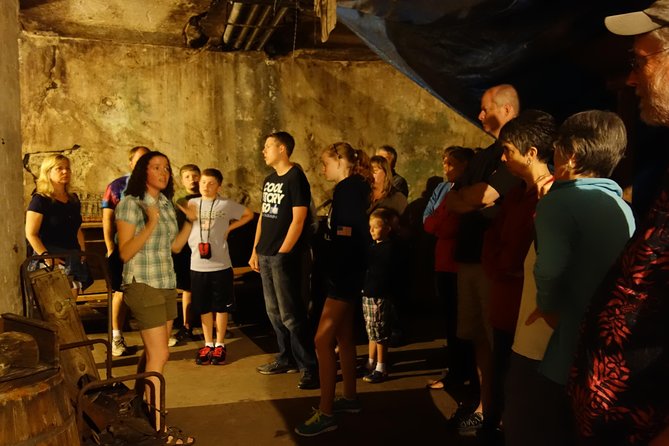
Seattle’s Pioneer Square has a second city below the sidewalks. On the Beneath The Streets Underground History Tour, you walk through three old passageways built in the 1890s, then step back above ground to connect those spaces with the Seattle you see today. The story covers the Great Fire, the Klondike Gold Rush, Skid Row, and the Coast Salish peoples who first lived here.
I like two things in particular. First, the tour joins physical remains with clear city history, so you can see why an underground level exists instead of simply hearing a string of dates. Second, the guides bring different personalities to the hour. David, Patti, Imogen, Sarah, Jim, and Daniel have all been praised for adding humor and personal detail. The main catch is simple: you spend part of the tour above ground, since the underground spaces are not connected.
Key points to know before you book
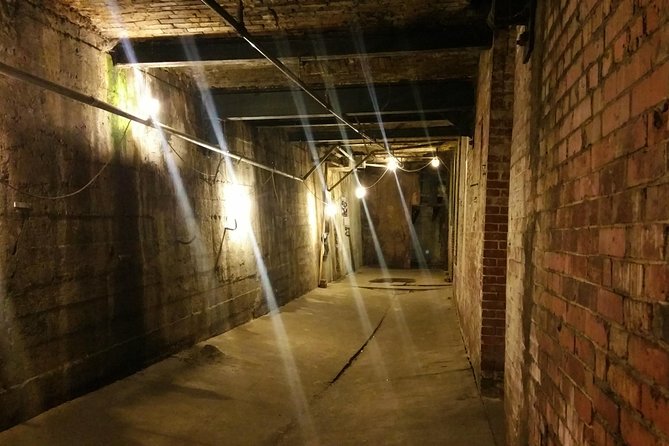
- Three separate underground spaces: You will not walk through one continuous tunnel. The route moves above ground between the old passageways.
- A compact Pioneer Square walk: Expect about four blocks, roughly half a mile, at an easy pace.
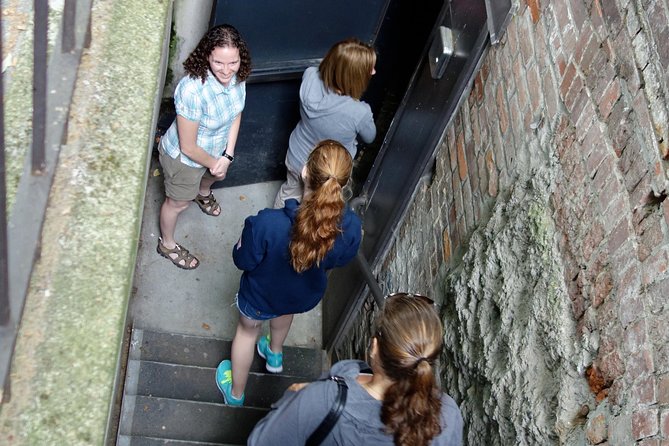
- Three flights of stairs: You go up and down each flight, with uneven surfaces underfoot.
- A guide-led history lesson: The focus is on Seattle’s beginnings, 1890s construction, Indigenous history, the Great Fire, Skid Row, and the Klondike Gold Rush.
- Small groups help the storytelling: The maximum group size is 20 people, and at least two people must book for the tour to run.
- Plan around the weather: The tour operates in rain, but the provider may cancel in poor weather and offer another date or a full refund.
Why Seattle built streets above its old sidewalks
The most useful thing to understand before starting is that Seattle does not have one vast underground city. Its old lower levels were created as the city rebuilt and raised portions of its streets in the late nineteenth century. The underground spaces are separate, and modern sidewalks now sit above parts of the original storefronts and walkways.
That fact shapes the whole tour. You will walk below the present street level, but you will also spend time on today’s Pioneer Square streets. The guide uses the two levels to show how Seattle changed, rather than treating the underground as an isolated attraction.
The tour begins at 102 Cherry Street, near Pioneer Square. From there, the guide introduces the area’s early settlement and the forces that shaped the city in the 1890s. The Coast Salish story is part of that opening context. This matters because Seattle did not begin with the arrival of American businessmen or the later gold rush. Indigenous communities lived here first, and the tour gives that history a place in the story.
The company says its guides take part in workshops on cultural traditions and history with special historians and Native Tribal members. You should still expect a one-hour overview rather than a long academic seminar, but that preparation helps the tour move beyond the usual city-building tale.
More underground tours in Seattle:
- Seattle: Guided Underground Walking Tour
★ 4.6 · 2,144 reviews - Seattle Half Day Tour with Space Needle, Boat Ride & Underground
★ 3.5 · 9 reviews - Seattle: Small Group Tour W/Space Needle, Boat & Underground
★ 3.0 · 5 reviews
Three underground passageways, not one long tunnel
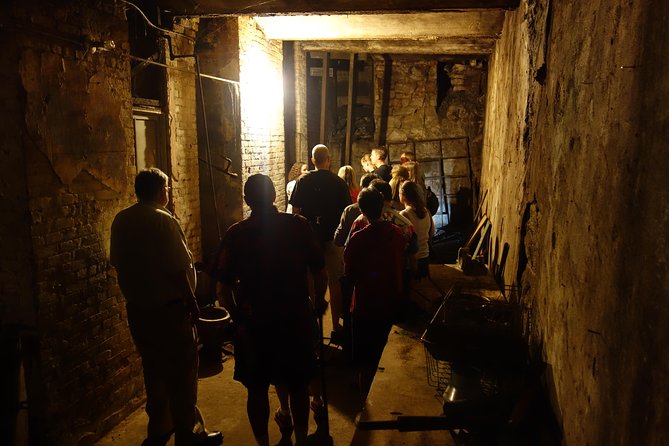
The first section takes you into the old spaces beneath Pioneer Square. You’ll see parts of the lower-level streets and buildings that were constructed more than 120 years ago. The appeal comes from the contrast: modern Seattle sits just overhead, while the old street level remains below your feet.
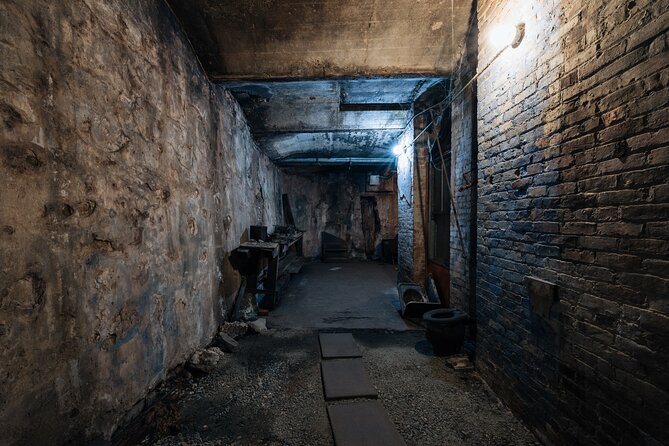
Do not expect polished museum galleries or a continuous route. The spaces are historic, and the surfaces can be uneven. That gives the place character, but it also means you should wear stable shoes and watch your step.
The underground areas are cleaner and less unpleasant than some people imagine. You are not entering a foul, waterlogged tunnel. The setting is still old and enclosed, though, so anyone uneasy with dark or confined spaces should know what to expect. One useful point is that the tour has worked well for people with claustrophobia, but personal comfort varies.
The guide does most of the work. This is not an attraction where signs explain everything at your own speed. Your guide points out architectural details, explains what stood at the old street level, and uses stories to show how the neighborhood functioned.
Above ground in Pioneer Square
The above-ground part is not filler. It is how the tour connects the lower level to the present city.
You’ll walk across about four blocks of Pioneer Square at a relaxed pace. The guide compares the modern neighborhood with its earlier form, including the area once known as Skid Row. That name referred to a run-down urban district and, in this setting, its main street in Pioneer Square.
This section helps explain why Seattle’s underground passages existed in the first place. You can look at the current streets, then picture the older sidewalks and shopfronts below them. The guide’s job is to make those layers line up in your mind.
This is also where expectations matter most. If you booked the tour imagining a full hour below the pavement, you may feel shortchanged. One tour taker specifically found there was more talking and walking above ground than expected. The company explains that the three underground areas are not connected, so moving between them requires surface walking.
I see that as a fair trade for the broader story, but you should decide what you want. If your priority is architecture, city growth, and the relationship between old and new Seattle, the street sections add value. If you mainly want enclosed passageways, the experience may feel too brief underground.
The Great Fire and Seattle’s rebuilding
The tour uses the Great Fire as a turning point in Seattle’s story. The fire helped drive major changes in construction and city planning. Rather than simply replacing damaged buildings, Seattle changed portions of its streets and created the conditions that left old lower levels beneath the new ones.
This is where the underground becomes more than a curiosity. You see the physical result of a city making practical, sometimes awkward choices after a disaster. The old spaces are evidence of rebuilding, not a secret subway system.
Your guide also explains how the new city developed around 1890s architecture. The exact emphasis can vary because the guides are not locked into a rigid script. That is a strength when you get someone like David, Patti, Imogen, or Sarah, whose humor and personal delivery can make the hour lively. It can also mean that one departure gives more attention to a topic than another.
Several people singled out the guides’ energy and ability to answer questions. Imogen, for example, was praised for creating vivid pictures of earlier Seattle, while Patti was noted for her enthusiasm about the underground. David has been especially effective at linking what you see below the street with what remains above it.
More history walks in Seattle:
- Taste Pike Place Walking Food Tour
★ 5.0 · 930 reviews - Seattle Delicious Donut Adventure & Walking Food Tour
★ 5.0 · 772 reviews - Haunted Seattle Booze and Boos Ghost Walking Tour
★ 5.0 · 572 reviews - Seattle: Terrors and Ghosts Guided Walking Tour
★ 4.3 · 204 reviews
Seattle and the Klondike Gold Rush
The Yukon gold fields form another major part of the tour. When news of gold spread, Seattle played an important role in the rush north. The city became a staging point for people, supplies, and business connected with the Klondike.
The value of this section is that it shows Seattle as a city shaped by opportunity and promotion. The gold rush did not merely add a colorful chapter. It helped push Seattle into a larger role and changed how people viewed the city.
You’ll hear about the stampede toward the Yukon and Seattle’s part in that movement. For more context after the tour, the nearby Klondike Gold Rush museum is a useful follow-up. It is free, and one guide has directed people there, including to its theater presentation. Pairing the two makes sense if you want more than a quick introduction.
The underground spaces also gain meaning when placed beside the gold rush story. Seattle’s old lower levels are not just leftovers from construction. They belong to a period when the city was changing quickly, attracting new business, and trying to present itself as a serious western center.
Guides make or break the hour
This tour depends heavily on the person holding the microphone, or simply leading the group. The company uses non-scripted guides, so you may get a different balance of jokes, architecture, politics, Indigenous history, or gold rush stories depending on the departure.
That flexibility is part of the appeal. Strong guides make the tour feel like a conversation rather than a recorded speech. The best examples in the supplied guide roster include David, Patti, Imogen, Sarah, Jim, and Daniel. The guide assigned to your time is not guaranteed, so book for the subject, not a particular person.
Humor is a recurring part of the experience. That can make difficult or dry material easier to remember, and several guides have been described as funny, warm, and lively. Still, comedy is personal. If you want a strictly formal history lecture, this may feel loose. If you like a guide who can answer questions and add side stories, the format should suit you.
The small maximum group of 20 helps. A guide can usually keep the group together through the passageways and respond to questions without turning the walk into a crowd-control exercise. The tour needs at least two people to operate, so a solo booking carries a small risk of cancellation if nobody else signs up. In that case, the provider gives a full refund.
What the physical side is really like
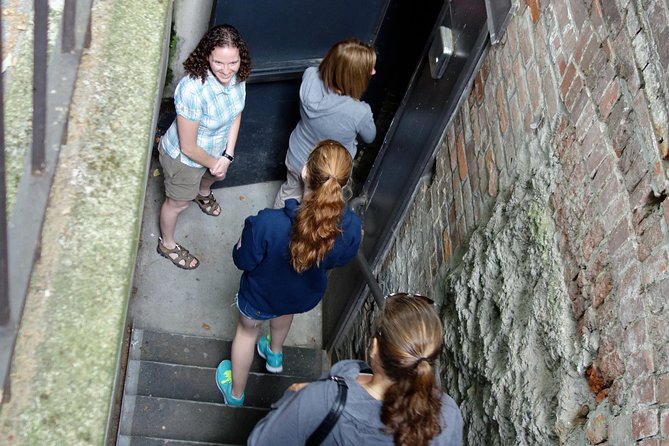
The route covers about four blocks, or roughly half a mile, at an easy pace. The distance is modest, but the stairs and old surfaces matter more than the mileage.
You’ll climb three flights of stairs, going up and down each flight during the hour. Most people who can manage ordinary stairs should find the pace reasonable, but this is not a step-free tour. Uneven ground is part of the old setting, so comfortable shoes are a must.
Service animals are allowed, and the activity is near public transportation. The supplied information says most people can take part, but it does not promise full accessibility. If stairs or uneven flooring are a concern, contact the provider before booking.
Seattle weather is another practical issue. The tour is described as operating rain or shine, so bring a rain layer and dress for a cool, wet day. At the same time, the provider may cancel if weather conditions are poor. If that happens, you can choose another date or receive a full refund.
Is $29.03 a fair price?
At $29.03 per person, this is priced as a short guided city experience, not a half-day attraction. You get about an hour with a professional guide, a walk through three underground spaces, and a history lesson covering several important periods in Seattle’s development.
I consider the price fair if you value interpretation. You could walk around Pioneer Square on your own for free, but you would miss the explanations that connect the old street levels, the Great Fire, the gold rush, and the neighborhood’s changing role. The cost also buys a compact introduction that fits easily before lunch or between other downtown plans.
The value drops if you expect extensive underground access. The tour does not lead through miles of connected passages, and some of the hour is spent outside. In that case, you may prefer to compare Seattle’s two underground tour companies before paying.
Booking about 12 days ahead is the average pattern, but the practical point is to reserve a time that fits your day. The tour has multiple departures, which is useful if you are working around museum hours or a ferry schedule. Free cancellation is available up to 24 hours before the start time. Changes or cancellations inside that window are not refunded.
Who should take this tour?
I would recommend it to first-time visitors who want a quick explanation of how Seattle took shape. It also works for locals, since the underground level is easy to overlook even if you already know the city’s main sights.
Families can do well here, too. Children and teenagers may enjoy the physical setting, while the hour-long format avoids the fatigue of a long museum visit. A seven-year-old has managed the tour, and teenagers have enjoyed its mix of movement and stories.
History fans will get the most from it, especially if you are curious about urban rebuilding, the Klondike Gold Rush, or 1890s architecture. It also suits anyone who likes a guide with personality. The experience is less ideal for people seeking a long, fully underground route, a silent self-guided visit, or a step-free walk.
Should you book Beneath The Streets?
Book this tour if you want a short, guided introduction to Seattle’s beginnings and like the idea of seeing both the old street level and modern Pioneer Square. The strongest reason to go is the combination of physical remains and human stories, especially when your guide brings warmth and humor to the hour.
Skip it, or compare it with another local underground tour, if your main goal is spending most of your time below ground. The three spaces are separate, and the surface walking is essential to the route.
For most visitors, the sensible plan is to wear good shoes, allow an hour, bring rain protection, and add the free Klondike Gold Rush museum afterward if you want more context. At $29.03, it is a reasonable way to understand why Pioneer Square looks the way it does today.
FAQ
Where does the Beneath The Streets tour start?
The tour starts at 102 Cherry Street, Seattle, Washington 98104.
Where does the tour end?
The stated end point is the Union Trust Building at 119 South Main Street, Seattle, Washington 98104. The tour information also refers to Occidental Square as the ending area.
How long does the tour last?
The tour lasts approximately one hour.
How much walking is involved?
You walk about four city blocks, roughly half a mile or 0.8 kilometers, at a relaxed pace.
How many stairs are there?
The tour includes three flights of stairs, with each flight climbed and descended during the route.
Is the tour fully underground?
No. You visit three underground passageways, but they are not connected. The group walks above ground between them.
What subjects does the guide cover?
The tour covers Seattle’s beginnings, 1890s architecture, the Great Fire, the Klondike Gold Rush, Skid Row, and the Coast Salish peoples who first inhabited the area.
Can children take the tour?
Most people can participate, and the tour has been suitable for families, including a seven-year-old. The stairs and uneven surfaces should be considered before booking.
What happens if I cancel?
You receive a full refund if you cancel at least 24 hours before the start time. Cancellations or changes made less than 24 hours before the start time are not refunded.
More history tours in Seattle
- Henry Art Tours-Come See the Fun Side of Seattle Art/Pubs/History
★ 5.0 · 27 reviews - Seattle Downtown Quest: Self-Guided History Adventure
★ 4.0 · 26 reviews - Bite-Sized Seattle History & Food by Go West Tours
★ 5.0 · 16 reviews - Full-Day Small-Group Bainbridge Island Wine and History Tour
★ 5.0 · 14 reviews
Recently added around Seattle
- One – Way Transfer from Pier 66 to SeaTac international Airport★ 3.5 · 3 reviews
- Where the Hops Grow! Yakima Brewery Tour★ 5.0 · 3 reviews
- Winter Day Tour to Longmire on Mount Rainier from Seattle★ 5.0 · 4 reviews
- Yellowstone Grand Teton and Coeur d’Alene 5-Day Tour from Seattle★ 5.0 · 5 reviews
- Food Tasting & Arts Tour of Pike Place Market★ 5.0 · 27 reviews
- Private Cascade Mountains and Waterfalls Tour from Seattle★ 5.0 · 6 reviews
- Enjoy Woodinville Winery area by Chauffeured Private Vehicle★ 3.5 · 5 reviews
- Awesome Scavenger Hunt: Seattle By The Sound★ 3.5 · 3 reviews
Seattle Underground Tours, compared.

Seattle Half Day Tour with Space Needle, Boat Ride & Underground
Read our review →
Small Group Tour W/Space Needle, Boat & Underground
Read our review →Browse the lists this tour appears in