
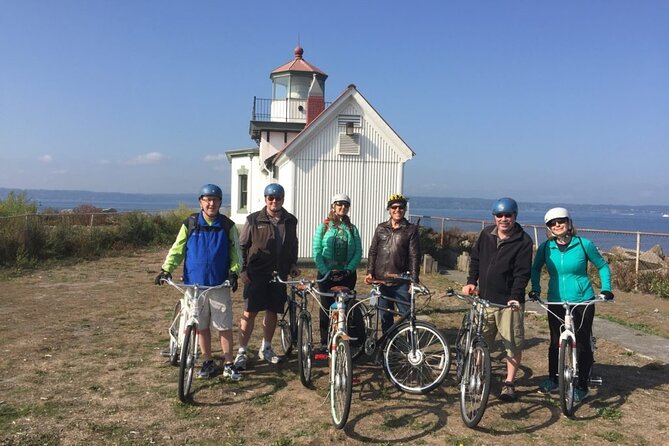
Reviewed · SEATTLE BIKE AND E-BIKE TOURS
Emerald City Bicycle Tour
Seattle reveals itself best when you leave the postcard center behind. This three-hour ride covers eight neighborhoods, linking waterfront paths, the Space Needle, houseboats, the Ballard Locks, and the salmon ladder in one moving tour. You get a useful sense of how the city fits together instead of seeing one attraction at a time.
I like the small limit of 12 people, which makes it easier to hear your guide and get help with gears or traffic. I also like the route’s mix of protected lanes and dedicated trails, especially the ride from South Lake Union toward Fremont and Ballard. The tradeoff is simple: this is still a workout, with some hills, and a few stretches are more industrial than scenic.
Key points to know before you book
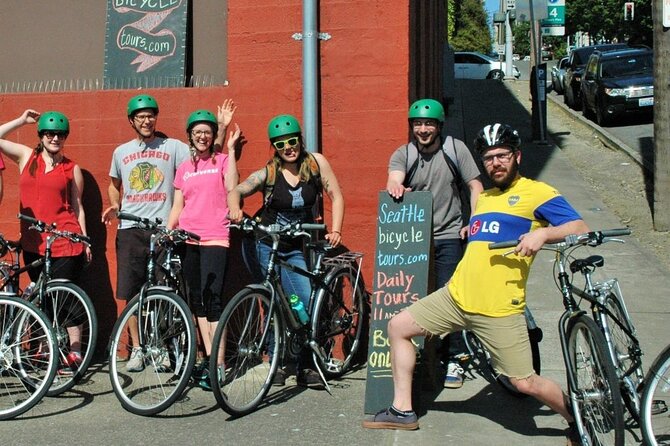
- Eight Seattle neighborhoods in three hours: The route gives you a broad first look at the city, from the waterfront to Magnolia.
- A maximum of 12 riders: The small group keeps the ride personal and easier to manage.
- Protected lanes and bike trails: Much of the route uses separated cycling space, though you still need to ride confidently in an urban setting.
- Ballard Locks is a real highlight: You can see boats move between Puget Sound and the city’s freshwater lakes, plus the salmon fish ladder.
- Moderate effort, not a casual roll: Riders should know how to shift gears and be ready for hills.
- A good first-day activity: The route helps you choose which Seattle neighborhoods and sights deserve more time later.
Why this route gives you a useful Seattle orientation
At $99 per person, this is not the cheapest way to see Seattle. But price matters less when you consider the distance covered, the supplied bicycle and helmet, the guide, bottled water, and the small group. In three hours, you connect parts of the city that would take much longer on foot.
The tour is also practical for a first morning in Seattle. Several people have found it useful early in a visit because the ride points out neighborhoods, parks, venues, and local areas they can return to later. You get a city overview and a bit of exercise at the same time.
The 9:30 am start works well for that purpose. You spend the morning outside and still have much of the afternoon for museums, Pike Place Market, the Space Needle, or a neighborhood you discovered on the route. The tour ends where it starts, at Vine Street Storage, 11 Vine Street.
The small group helps with more than friendliness. Your guide can keep an eye on different cycling abilities, explain when to shift, and pause the group without creating a long line of riders. Darryl, Rina, Monte, Eileen, Terae, Ike, and other guides have led rides praised for clear city stories, warmth, and careful pacing. Guide assignments can vary, so you should not book expecting one particular person.
More bike and e-bike tours in Seattle:
- Bike Tour Seattle. 5 star Electric Bike Tour Seattle’s waterways
★ 5.0 · 84 reviews - Seattle’s Electric City Bike Tour
★ 5.0 · 27 reviews - West Seattle Electric Bike Tour
★ 5.0 · 25 reviews
From the waterfront to Olympic Sculpture Park
The ride begins near Seattle’s waterfront, using inner-city bike trails to get moving. This opening gives you a quick taste of the city’s central setting, with water, hills, and dense urban streets all close together.
You then follow the Elliott Bay bike trail toward Olympic Sculpture Park. This is one of the more pleasant sections of the route. The park adds open space and large outdoor art to the ride, and the trail lets you see the waterfront without spending the whole time negotiating car traffic.
Your guide fills the ride with facts and pictures about Seattle. That commentary matters here because the route is not just a series of photo stops. You are moving through the city while learning how the neighborhoods connect and how Seattle has changed.
You should still keep your expectations realistic. This is a bicycle tour, not a long stop at every attraction. You will see and discuss places from the saddle, with selected pauses rather than extended visits. If you want detailed time inside the sculpture park, you may need to return on your own.
Queen Anne and the 1962 World’s Fair site
From the waterfront, the route climbs toward uptown Queen Anne and the former site of the 1962 World’s Fair. This is where the city’s hills become more obvious. Some riders describe the effort as easy or moderate, while others point out that you need to know how to shift gears and handle a few hills.
The bikes have enough gears to make those climbs manageable, but you should not arrive expecting a completely flat ride. If you can ride a bicycle comfortably and handle moderate physical activity, the route should be within reach. If hills are a serious concern, ask about the route and bike setup before you commit.
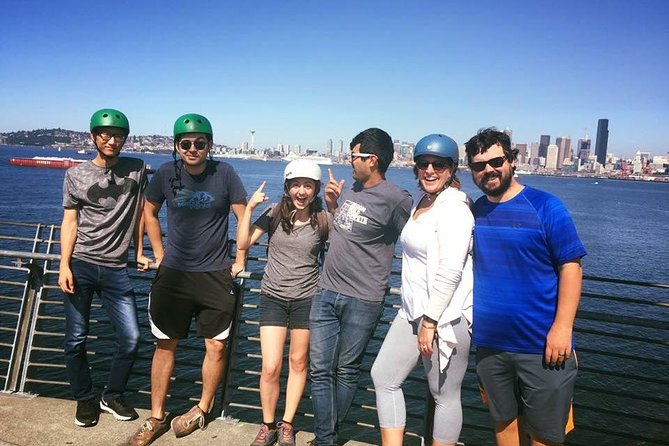
At Seattle Center, you get a look at the Space Needle and the collection of attractions built around the fair site. Seeing the Space Needle from a bicycle gives you a different angle than simply arriving at its base by car or train. The stop also places Seattle’s modern identity in context, connecting the city’s technology, design, and public spaces with its mid-century world’s fair past.
The ride does not replace a visit to the Space Needle or its surrounding attractions. Instead, it gives you a quick orientation and helps you decide if you want to spend more time there later.
South Lake Union, houseboats, and cyclist-friendly streets
After Seattle Center, the ride heads toward South Lake Union, an area closely tied to Seattle’s technology economy. This section shows the city in a different mood from the waterfront and older neighborhoods. You see how offices, housing, transportation routes, and new cycling infrastructure have changed the area.
A strong feature here is the attention to bicycle design. The route includes cycling signals and trails made with riders in mind. That gives you a useful look at how Seattle is trying to make bicycle travel work in a busy city.
The Westlake cycle trail then takes you past houseboats and seaplanes as you continue north. These details make the ride feel distinctly Seattle. You are not simply passing generic city blocks. You are seeing the mix of water, homes, aircraft, technology, and public paths that gives the city its character.
This part is not scenic every second. One rider specifically preferred more neighborhood riding and less industrial scenery. That is a fair criticism. The value of this section is understanding Seattle’s working and changing parts, not constant views of mountains and water.
A few more Seattle outings worth weighing up
- Seattle City Highlights Tour
★ 5.0 · 2,000 reviews - Seattle City and Snoqualmie Falls Half-Day Guided Tour
★ 5.0 · 1,293 reviews - Seattle City Tour
★ 5.0 · 1,147 reviews - 3 Hour Show Me Seattle Best Of The City Tour
★ 4.5 · 763 reviews
Fremont by bicycle, with time to look around
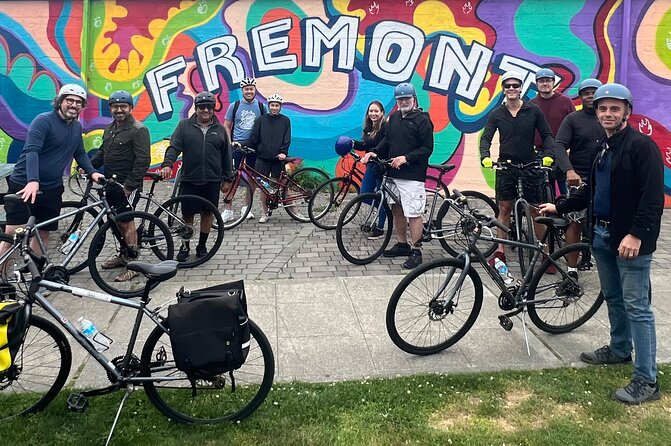
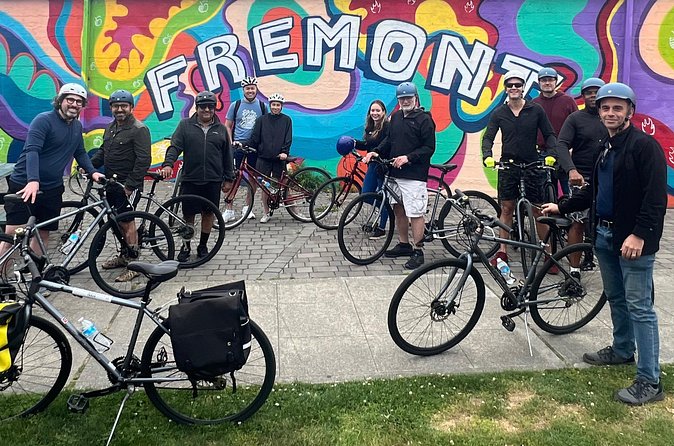
The Westlake trail leads into Fremont, one of the more unusual neighborhoods on the route. Here, you cruise at a local pace through an area known for its independent personality and creative public spaces.
Fremont is a good place to see why bicycle tours can beat a standard sightseeing bus. You move slowly enough to notice streets and neighborhood details, but quickly enough to cover ground. You also avoid the fatigue of walking between scattered parts of the city.
Your guide’s commentary adds context, and the group normally makes convenient stops for stories and a breather. The exact amount of time at each point can vary, so think of Fremont as part of the moving tour rather than a dedicated neighborhood walk.
If you enjoy local districts more than a checklist of major attractions, this may be one of your favorite portions. Several riders have later returned to neighborhoods they first noticed during the ride. That is a sign of useful sightseeing: it gives you ideas for the rest of your visit.
Ballard Locks and the salmon ladder
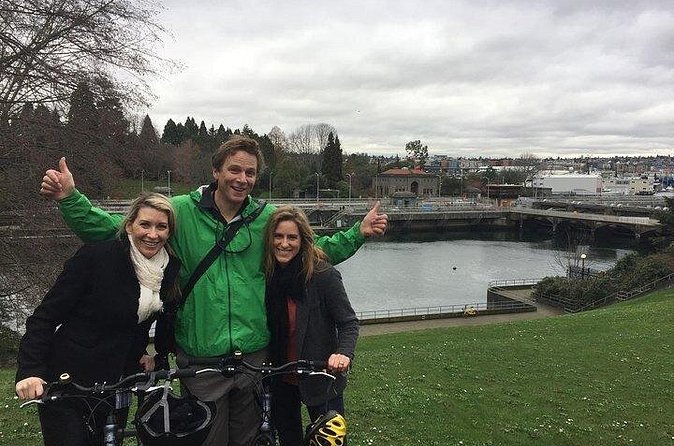
The Ballard Locks are the tour’s most distinctive stop. The locks let boats move between Puget Sound and Seattle’s freshwater lakes, and you can watch the system handle the difference in water levels. The tour describes the site as the busiest locks system of its kind in the United States.
You also see the salmon fish ladder. If your timing lines up with salmon season, this can be especially memorable, and one ride was praised for arriving during spawning time. Salmon activity is seasonal, though, so do not book with a guarantee that you will see fish.
The locks add substance to the tour. You are not just looking at a famous structure. You are seeing how Seattle’s waterways support boats, industry, recreation, and wildlife in one place. The stop also gives you a chance to get off the bike and take in a working part of the city.
This is a popular area, so the experience can feel less quiet than the trail sections. Still, it is one of the best reasons to choose this route over a shorter downtown bike ride. You get a place with a clear purpose and a story you can understand on the spot.
The Burke-Gilman Trail and the return to the waterfront
After Ballard, the route turns toward Magnolia and uses the Burke-Gilman Trail on the way back. Dedicated trails make the return more relaxed than a ride through constant city traffic, though you still need to stay aware of other path users.
The last stretch brings you back toward Seattle’s waterfront. The changing views are part of the appeal. The ride begins near the water, moves through central neighborhoods and urban development, reaches the locks and trails farther north, then returns to the city’s edge.
Weather can shape this final section. Seattle may begin under clouds and finish with sunshine, or the reverse. The tour operates in all weather conditions, so dress for rain, wind, or sun. The operator may cancel if conditions are poor, in which case you are offered another date or a full refund.
Bring clothing you can ride in, not just sightseeing clothes. You should also consider sun protection, since even a cool day can leave you exposed for three hours. Bottled water is supplied, but it is sensible to arrive ready for a moderate physical activity.
How hard is the ride?
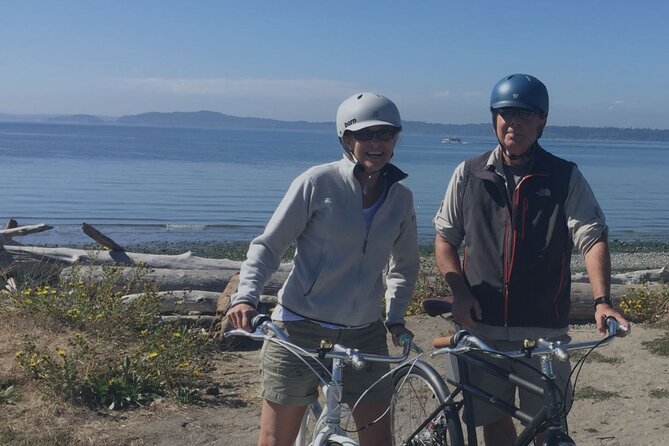
The safest description is easy to moderate for an experienced cyclist, with several hills that require attention. The route is not presented as a race, and guides have adjusted the pace for different cycling abilities. Still, you should already know how to ride a bicycle and shift gears.
The bikes and helmets are provided, and the equipment has received strong praise for quality. You do not need to arrange a rental separately. That saves time and removes one common worry with city cycling tours.
You should be comfortable riding for about three hours with stops. The group uses protected lanes and bike paths for much of the route, but this remains an urban ride. You need to follow your guide, watch intersections, and respect pedestrians. One particularly good detail is the attention some guides give to pedestrian safety, which helps keep the experience considerate rather than hurried.
This tour suits you if you cycle at home, ride occasionally, or want an active way to see Seattle. It may not suit you if you dislike hills, have limited physical fitness, or want a ride with no traffic awareness at all.
Group size, guide style, and what you receive
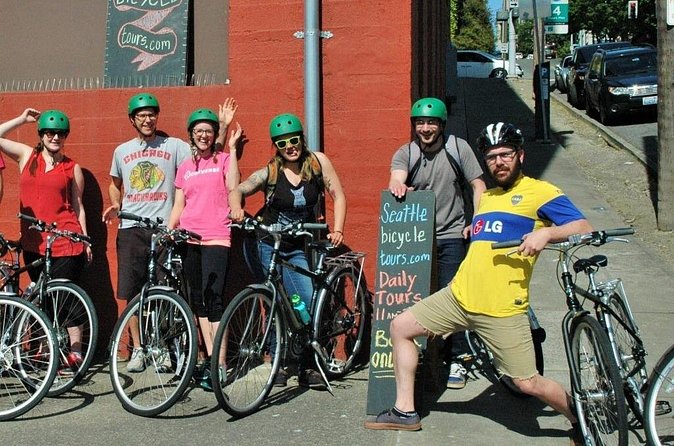
The maximum group size is 12 people. That is small enough for questions and personal attention, but large enough to provide the energy of a group outing.
The guides are a major part of the experience. Darryl is praised for his Seattle history and care with the group. Monte has led rides with strong fall scenery and an easy pace. Rina has been described as engaging and accommodating, while Eileen and Terae have been praised for making riders feel included. The names are useful context, but guide availability changes.
The best guides do more than recite facts. They learn names, watch the slower riders, keep the group together, and explain the city in a way that makes the route easier to remember. A short quiz at the end has even been used to wrap up the ride, adding a light touch without turning the tour into a classroom.
The tour is offered in English and uses a mobile ticket. It is near public transportation, and the activity ends back at the starting point. Confirmation arrives at booking. The experience is non-refundable and cannot be changed for personal reasons, so check your plans carefully before paying. If the minimum group size is not reached, the operator offers another date or experience, or a full refund.
Is $99 a fair price?
At $99, you are paying for more than a bicycle rental. The fee covers the bike, helmet, bottled water, guide, route planning, and three hours of escorted sightseeing. The small group also gives this ride more value than a large convoy where you spend much of the time trying to stay close to the guide.
The price is easiest to justify if you want orientation, exercise, and local context in one morning. It is less appealing if you only want a quick ride along the waterfront or plan to rent a bicycle and explore independently.
I would also compare the cost with what it would take to cover these distances yourself. You would need to plan a route through several neighborhoods, find safe cycling connections, navigate the locks, and return to downtown. The tour removes that planning burden while showing you paths you might not find on your own.
The overall rating is 4.9 from 162 reviews, with 96 percent recommending the experience. Those numbers fit the strongest pattern in the feedback: guides, safety, route variety, good bikes, and the amount of Seattle covered in three hours receive the most praise. The main cautions are the hills and a few less scenic industrial stretches.
Who should book the Emerald City Bicycle Tour?
Book it if you want to get your bearings quickly, prefer neighborhoods to a fixed downtown loop, and are happy to work a little for your sightseeing. It is particularly useful at the start of a Seattle visit, when you can mark places to revisit later.
Families with older children and teenagers can enjoy it if everyone is comfortable riding. Solo visitors also fit the format well because the small group and guide provide company without requiring a private tour. Couples who already take bike tours in other cities should find this route broad and active rather than repetitive.
Skip it if you want a slow walking tour, a guaranteed sunny morning, or a completely flat route. Also think twice if you are not confident shifting gears or riding near urban crossings.
My practical advice is to book early in your stay, dress for changing weather, and leave room in your schedule afterward. You may finish ready for lunch, but you will also have a better idea of where you want to spend the rest of your Seattle visit.
FAQ
How long is the Emerald City Bicycle Tour?
The tour lasts approximately three hours.
What time does the tour start?
The scheduled start time is 9:30 am.
Where does the tour meet?
You meet at Vine Street Storage, 11 Vine St, Seattle, WA 98121.
Where does the tour end?
The activity ends back at the meeting point.
How many people can join the tour?
The maximum group size is 12 travelers.
Are bicycles and helmets provided?
Yes. The tour provides a bicycle and helmet, along with bottled water.
Does the tour operate in bad weather?
The tour operates in all weather conditions, so you should dress appropriately. If poor weather causes the operator to cancel, you are offered a different date or a full refund.
Recently added around Seattle
- One – Way Transfer from Pier 66 to SeaTac international Airport★ 3.5 · 3 reviews
- Where the Hops Grow! Yakima Brewery Tour★ 5.0 · 3 reviews
- Winter Day Tour to Longmire on Mount Rainier from Seattle★ 5.0 · 4 reviews
- Yellowstone Grand Teton and Coeur d’Alene 5-Day Tour from Seattle★ 5.0 · 5 reviews
- Food Tasting & Arts Tour of Pike Place Market★ 5.0 · 27 reviews
- Private Cascade Mountains and Waterfalls Tour from Seattle★ 5.0 · 6 reviews
- Awesome Scavenger Hunt: Seattle By The Sound★ 3.5 · 3 reviews
- Enjoy Woodinville Winery area by Chauffeured Private Vehicle★ 3.5 · 5 reviews
Seattle Bike and E-Bike Tours, compared.
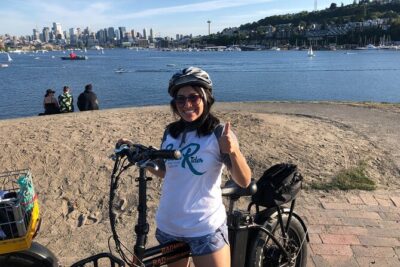
Bike Tour Seattle. 5 star Electric Bike Tour Seattle’s waterways
Read our review →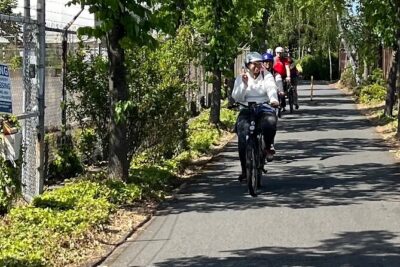
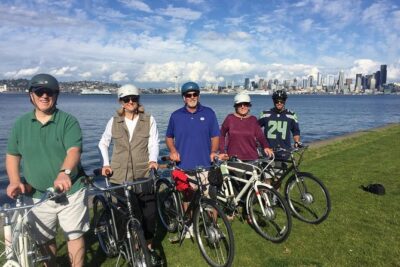
Viator Exclusive-Snoqualmie Tunnel MTN Bike Tour from Seattle
Read our review →
Browse the lists this tour appears in