
Reviewed · SEATTLE FOOD TOURS
Eat Around the World Seattle Food Tour
Seattle’s best food story may be found in one neighborhood. This 2.5-hour walking tour starts near Smith Tower and Pioneer Square, then works through the Chinatown International District with small bites from several Asian food traditions. You might sample Japanese festival snacks, Chinese dumplings, Hawaiian musubi, Filipino-style sweets, and tea or coffee, all while learning how the district took shape.
I like the tour’s local scale and its generous food plan. You are not just handed one famous dish and sent on your way. The tastings are intended to equal a full meal, and the route may include an Asian supermarket, bakery, long-running restaurant, or neighborhood cafe. I also like the way guide Lee connects each bite to the people and places around it.
The main catch is that not every stop is guaranteed, and the tour may not suit guests with gluten sensitivity or vegan restrictions. It is also a walking tour through a historic urban district, so anyone needing a highly predictable route should ask about accommodations before booking.
Key points to know before booking
- Global food in one neighborhood: Expect Japanese, Chinese, Korean, Filipino, Hawaiian, and other Asian-inspired tastes.
- Guide Lee brings the history: He leads with stories about Seattle, the International District, and the people who shaped it.
- The tastings equal a full meal: Come hungry, since the food is more substantial than a few token samples.
- Small groups help: The maximum is 12 people, and one booking even became a private experience with Lee.
- The route begins near Smith Tower: You walk from Pioneer Square toward the Chinatown International District and finish in the district.
- Food restrictions need planning: Alternatives may be possible, but you should contact the operator before booking.
Why this Seattle food tour feels different
Many city food tours hop between trendy restaurants. This one keeps its focus tight. Most of the time is spent in Seattle’s Chinatown International District, a neighborhood where Chinese, Japanese, Filipino, Korean, and other Asian American traditions meet in daily life.
That focus matters. You get food, but you also get a sense of place. A tea stop in a historic hotel, a snack chosen inside an Asian grocery store, or a pastry from a local cafe can tell you more about a neighborhood than a polished restaurant tasting menu.
The tour lasts about two hours and 30 minutes. Ten minutes are set aside near Smith Tower, with the remaining time devoted mainly to the International District. The pace includes plenty of food stops, so you are not walking without a break for hours.
Lee is the named guide associated with the experience. He is especially useful if you want context along with lunch. His stories cover Seattle’s early days, the growth of the city, the district’s changing fortunes, and the businesses that have served local communities for decades.
The group limit of 12 is another plus. Small food stops can become awkward with a large crowd, especially in a grocery store or compact cafe. A small group makes it easier to hear Lee and easier for the group to move through working neighborhood businesses.
More food tours in Seattle:
- Chef Guided Food Tour of Pike Place Market
★ 5.0 · 3,733 reviews - Pike Place Market Tasting Tour
★ 5.0 · 1,696 reviews - Early-Bird Tasting Tour of Pike Place Market
★ 5.0 · 1,154 reviews
Starting at Smith Tower and old Skid Road
The meeting point is 506 2nd Avenue, in front of Smith Tower at the intersection with Yesler Way. This places you near Pioneer Square, Seattle’s oldest central neighborhood, and next to one of the city’s most recognizable early skyscrapers.
The tour begins with a short introduction to the area. Your guide may explain the story behind Yesler Way and the name Skid Road, a phrase tied to Seattle’s early timber economy and rough pioneer beginnings. This opening gives you a useful frame before the food begins.
Smith Tower itself is worth noting for later. The tour does not include admission to its observatory or bar, but you may want to return after the walk to visit the top floor. That makes the tower a handy add-on rather than part of the food tour price.
From here, the walk heads toward the Chinatown International District. The route connects two nearby parts of Seattle, so you see how the city’s early commercial center relates to the communities that developed farther south.
Eating your way through the Chinatown International District
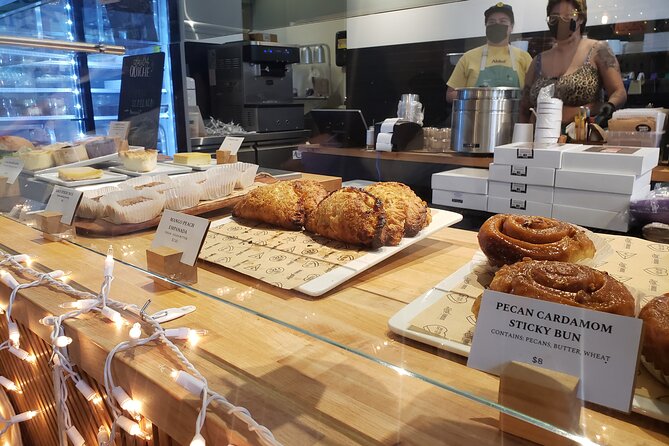
The center of the experience is the food. The tasting plan is broad rather than tied to one cuisine, and the exact sequence can change. You may try azuki bean-filled waffle cakes, savory octopus balls, dumplings with different fillings, musubi, and ube or pandan desserts.
That mix is useful for curious eaters. You can compare sweet and savory flavors, familiar and unfamiliar textures, and foods shaped by migration across the Pacific. The point is not to present one narrow idea of Asian food. It is to show how many food traditions share the same city block.
The food list includes:
- Japanese-inspired azuki bean waffle cakes
- Japanese-style savory octopus balls
- Chinese dumplings with assorted fillings
- Korean-inspired ube or pandan desserts
- Hawaiian-inspired musubi
- Coffee and or tea
The tour describes these tastings as enough for a full meal. I would still avoid eating a large lunch beforehand. Arrive ready to sample several items, since the value depends heavily on taking part in the food stops rather than treating them as optional extras.
Some foods may be picked up from small local eateries, while another snack may come from an Asian grocery store. That grocery stop is one of the more interesting touches. A supermarket can show you ingredients, packaged foods, and everyday shopping habits that are easy to miss on a standard sightseeing walk.
You may also pass an Asian bakery or a restaurant serving traditional Chinese dishes. Since the route is not fixed to every listed location, think of these as possible parts of the experience, not guaranteed appointments.
Tea, cafes, and the district’s Japanese side
One possible stop is a historic hotel and cafe with a connection to Seattle’s Japantown. Its main-floor cafe serves tea and snacks, and the building also preserves local Japanese American history.
This is a good counterpoint to the faster food tastings. A cup of tea gives Lee time to explain the neighborhood’s past, while the site itself connects food, memory, and community. The tour does not promise a full museum visit, so anyone wanting a detailed look at the collection should plan extra time nearby.
The route may also pass a Japanese restaurant dating to 1904. Even without a meal there, seeing a business with such a long history helps explain the district’s staying power. Another possible sight is a well-known Chinatown restaurant associated with a famous actor’s post-training meals. The restaurant’s celebrity connection is a fun detail, but the larger point is that these businesses have served regular local customers for many years.
The International District is not a museum set apart from daily life. Restaurants, shops, cafes, parks, and community spaces continue to operate here. That makes the walk more useful than a simple list of old buildings.
More food and drink tours in Seattle:
- Taste Pike Place Walking Food Tour
★ 5.0 · 930 reviews - Seattle: Pike Place Market Chef-Guided Food Tour
★ 4.8 · 847 reviews - Seattle Delicious Donut Adventure & Walking Food Tour
★ 5.0 · 772 reviews - The Original Food and Culture Tour of Pike Place Market
★ 5.0 · 594 reviews
Landmarks between Pioneer Square and Chinatown
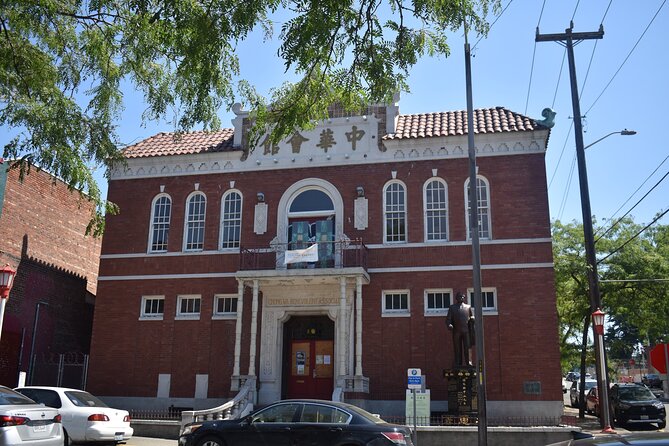
Food is the hook, but the route also gives you several landmarks to watch for. You may pass the former Great Northern Railway station, built in 1906. Trains played a major role in Seattle’s growth as a logging town and industrial center, and your guide may use the station to explain the city’s push to become an important Pacific Northwest hub.
Another possible sight is a terrace built into Seattle’s steep hillside. It includes small garden plots cared for by local residents, with a walkway and Japanese-style garden features farther uphill. It is an unusual reminder that neighborhood life can take shape in leftover spaces, not just formal parks.
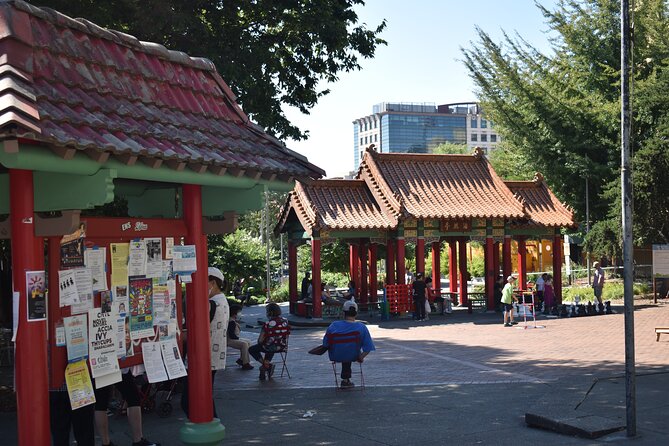
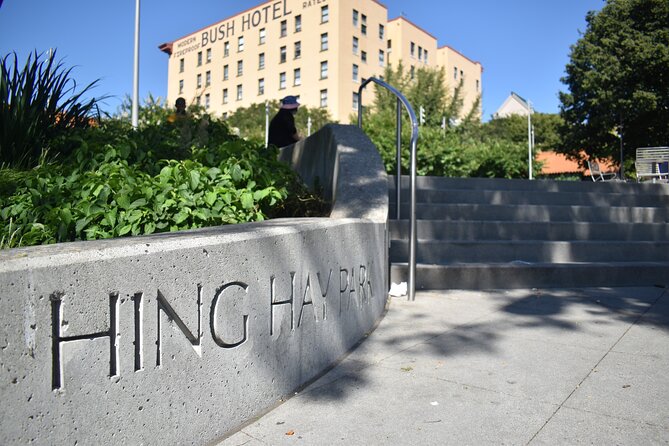
The tour may also pass an urban park in the center of the district. Residents use it for rest and recreation, and it gives the walking route a little breathing room between food stops.
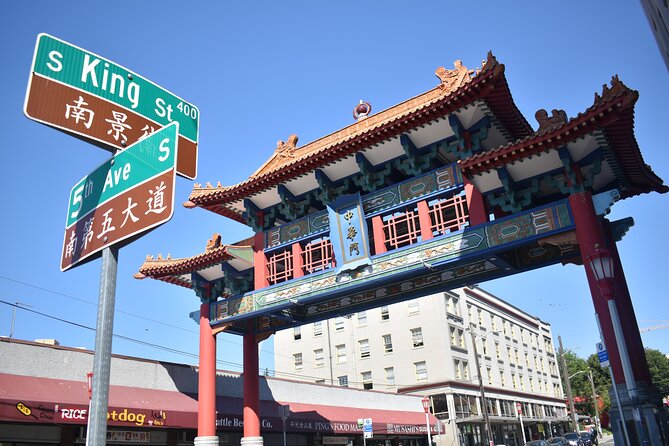
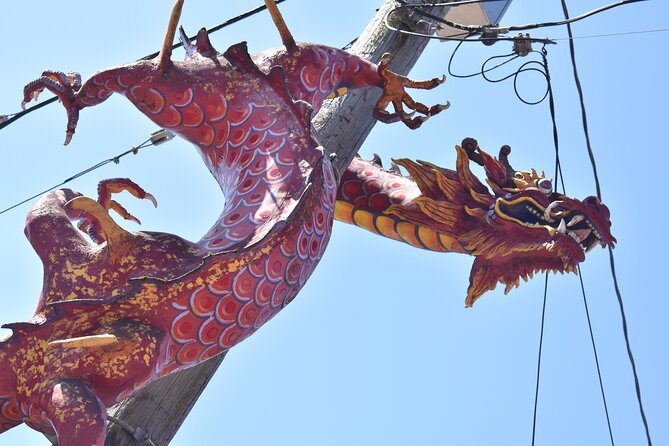
The Chinatown gate is another likely landmark. It offers a clear visual entry into the district and helps mark the transition from Pioneer Square into the neighborhood’s cultural center. Nearby museums and long-running restaurants add context, though you should not assume admission to those sites is included.
For a stronger history day, plan to visit the Wing Luke Museum after the tour. It holds artifacts, photographs, and oral histories about Asian American life in the region. The food tour can introduce the neighborhood, while the museum can give you more time with the stories behind it.
What the walking pace is really like
The tour is described as walkable, with frequent food stops. A guest using a walker was able to take part, which suggests that the pace can be manageable for some people with mobility needs. Still, the route includes city sidewalks and a steep Seattle setting, so you should contact the operator if you have specific mobility concerns.
The meeting point is close to public transportation. The tour ends in the Seattle Chinatown International District rather than returning to Smith Tower. That is convenient if you want to continue at the Wing Luke Museum, browse local shops, or find another meal nearby. It also means you should plan your onward route before you start.
Service animals are allowed, and most people can participate. The group size is capped at 12, though the group may be smaller. One scheduled tour turned into a private walk when other bookings changed, giving that guest extended one-to-one time with Lee. You should not count on a private tour, but a small group is a realistic possibility.
Wear comfortable walking shoes and bring an appetite. The tour is not built around long distances alone, but the combination of sidewalks, standing, and repeated stops makes practical footwear worthwhile.
Allergies, vegetarian needs, and food planning
This is not the easiest tour for every diet. Gluten sensitivity and vegan restrictions may be difficult to handle across a changing set of restaurants, bakeries, grocery products, and desserts.
The operator may be able to arrange alternatives or a private tour for certain restrictions, but you need to ask before booking. Do not wait until the meeting point. The listed tastings include dumplings, waffle cakes, octopus balls, musubi, tea, coffee, and sweet desserts, so ingredients can vary from stop to stop.
If you have a mild preference rather than a medical restriction, Lee may be able to explain what each item contains. For a serious allergy, get clear confirmation in advance and be prepared for the possibility that the full tasting plan cannot be provided.
Additional food and drinks are not included, nor are souvenirs or a tip for the guide. Since the tasting menu is intended to equal lunch, the $29 price is strong value if you can eat most of what is offered. It is less compelling if you will skip several stops because of dietary limits.
Is $29 a fair price?
Yes, for most unrestricted eaters. At $29, you are paying for a local guide, about 2.5 hours of walking and storytelling, and tastings meant to replace a full meal. The tour also gives you a first look at a neighborhood where you could easily spend the rest of the day.
The price works best because the food is spread across several kinds of businesses. You are not simply paying for a single restaurant meal with a guide attached. You may visit a grocery store, cafe, bakery, and established restaurants, with the route shaped by local business hours and availability.
The value is weaker if you want a formal museum tour, a guaranteed list of specific restaurants, or a high-end dining experience. Admission to Smith Tower, the Wing Luke Museum, and other attractions is not included. You may also want to budget for extra food and drinks if you are particularly hungry.
Free cancellation is available if you cancel at least 24 hours before the start time. Cancellations within 24 hours are not refunded, and late changes are not accepted.
Who should book this experience?
I would recommend it to first-time Seattle visitors who want more than the usual downtown sights. It is also a good choice for repeat visitors who have seen the waterfront and Pike Place Market and want a neighborhood-focused afternoon.
Food-focused couples, small groups, and solo visitors should find the format easy to enjoy. The combination of tasting and storytelling gives you plenty to talk about, and the smaller group cap keeps the walk personal.
Families may like the snack variety, though parents should consider the walking time and the changing menu. Anyone who prefers a fixed schedule, guaranteed restaurant reservations, or a single cuisine should choose a more structured food experience.
I would be cautious if you have serious dietary restrictions, since the operator specifically warns that some allergies and vegan needs may not be accommodated. Ask about alternatives before paying.
What to do after the final bite
The end point in the Chinatown International District gives you several ways to continue. The Wing Luke Museum is the clearest next stop if you want more Asian American history through objects, photos, and oral accounts.
You can also return to Smith Tower for its observatory and bar, visit the International District’s restaurants and shops, or stop at the Pacific Northwest’s largest public pinball collection to work off lunch with classic and newer machines.
The tour works well as a starting point rather than a complete day by itself. It introduces the district, points out places worth returning to, and leaves you in a neighborhood where you can keep exploring on foot.
Should you book the Eat Around the World Seattle Food Tour?
Book it if you want a small-group food walk with real neighborhood context, especially if Japanese, Chinese, Filipino, Korean, and Hawaiian-inspired flavors appeal to you. Lee’s history-focused approach, the full-meal tasting plan, and the chance to enter everyday local businesses make the $29 price easy to justify.
Skip it or ask detailed questions first if you need a strict gluten-free or vegan menu, guaranteed stops, or a fully accessible route. For everyone else, this is a practical way to spend a morning or afternoon in Seattle, with enough food to count as lunch and enough local background to make the Chinatown International District feel like more than a place you simply passed through.
FAQ
How long does the Eat Around the World Seattle Food Tour last?
The tour lasts approximately 2 hours and 30 minutes. About 10 minutes are associated with the Smith Tower starting area, while most of the walk takes place in the Chinatown International District.
Where does the tour begin and end?
It begins at 506 2nd Avenue in front of Smith Tower, near the intersection of 2nd Avenue and Yesler Way. It ends in Seattle’s Chinatown International District.
What food is included?
The tastings are intended to equal a full meal. They may include azuki bean-filled waffle cakes, savory octopus balls, dumplings, ube or pandan desserts, musubi, coffee, and tea.
Is the tour suitable for dietary restrictions?
The operator may not be able to accommodate certain allergies, gluten sensitivity, or vegan restrictions. Contact the operator before booking to ask about alternatives or a private tour.
How many people can join the tour?
The maximum group size is 12 people. The group may be smaller, and a private tour can occur if other bookings change.
What is the cancellation policy?
You can receive a full refund if you cancel at least 24 hours before the experience begins. Cancellations or changes made within 24 hours are not accepted and are not refunded.
Recently added around Seattle
- One – Way Transfer from Pier 66 to SeaTac international Airport★ 3.5 · 3 reviews
- Where the Hops Grow! Yakima Brewery Tour★ 5.0 · 3 reviews
- Winter Day Tour to Longmire on Mount Rainier from Seattle★ 5.0 · 4 reviews
- Yellowstone Grand Teton and Coeur d’Alene 5-Day Tour from Seattle★ 5.0 · 5 reviews
- Food Tasting & Arts Tour of Pike Place Market★ 5.0 · 27 reviews
- Private Cascade Mountains and Waterfalls Tour from Seattle★ 5.0 · 6 reviews
- Enjoy Woodinville Winery area by Chauffeured Private Vehicle★ 3.5 · 5 reviews
- Awesome Scavenger Hunt: Seattle By The Sound★ 3.5 · 3 reviews
Seattle Food Tours, compared.
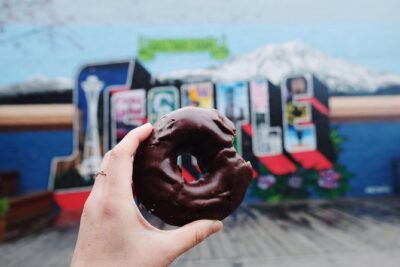
Seattle Delicious Donut Adventure & Walking Food Tour
Read our review →
Browse the lists this tour appears in